
Tech
Disadvantages of JV iPhones in Pakistan 2026: What the Low Price Really Costs


You walk into a mobile market in Karachi, Lahore, or Rawalpindi with one goal: get an iPhone on a tight budget. Then you see it, a “JV iPhone” for way less than the normal price. It looks clean, Face ID works, battery health seems okay, and the seller says, “Sir, bas Wi-Fi pe chala lo.”
Here’s the simple truth: a JV iPhone is usually a carrier-locked iPhone imported from abroad, often tied to one foreign network contract. In Pakistan, that extra lock creates extra problems, especially in 2026 when PTA enforcement and SIM-based services matter more than ever.
This guide breaks down the real disadvantages of JV iPhones in Pakistan 2026, so you don’t learn the hard way through blocked SIMs, unlock scams, and low resale value.
The biggest problem in 2026: SIM and PTA issues that can block your phone
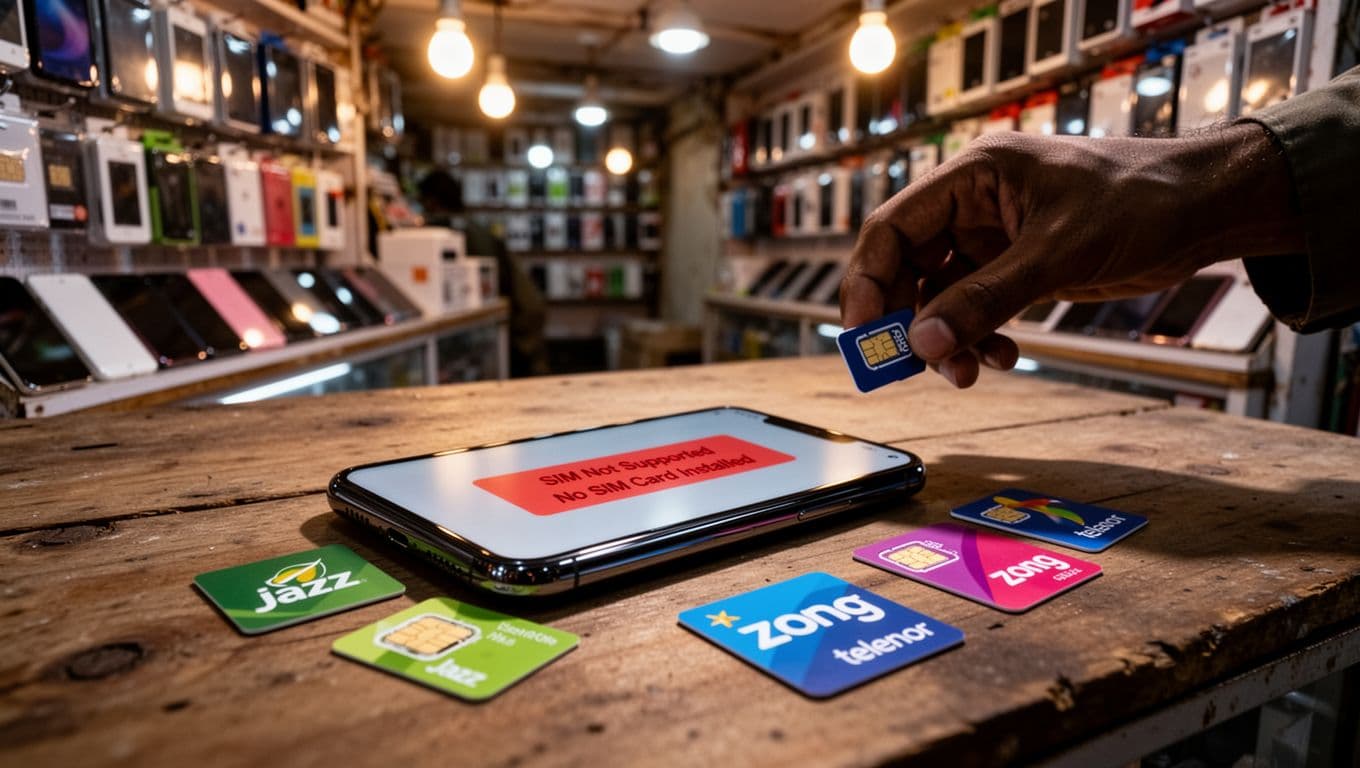
In Pakistan, the phone you buy isn’t judged only by condition. It’s judged by whether it can work with a local SIM, legally and reliably. This is where JV iPhones fall apart.
Most JV iPhones bring two locks together:
- Carrier lock (the phone is tied to a foreign network)
- PTA network restriction (Pakistan blocks unregistered devices from local cellular networks)
If either one hits you, your “cheap iPhone” turns into a Wi-Fi device. People say “Wi-Fi only” like it’s no big deal, but daily life says otherwise. Without a working SIM, you can’t depend on your phone outside home or office Wi-Fi.
Even worse, PTA problems don’t always show up on day one. A phone can look fine in the shop, then lose local SIM service later. That delayed pain is why many buyers feel tricked, even if the seller didn’t lie directly.
Here’s what “Wi-Fi only” often means in real life:
- No normal calls when you’re outside
- No SMS, including many verification messages
- No mobile data, so maps and ride apps fail on the road
- Banking and wallets can become stressful if your OTP depends on that SIM
If you need your iPhone to act like a phone, a JV model is a risky bet in Pakistan.
Carrier lock basics: why your JV iPhone may accept only one network (or no local SIM at all)
A carrier lock is not “locked to Jazz” or “locked to Zong.” It’s usually locked to a foreign carrier, like a US, UK, or Gulf network.
So you insert a Jazz, Zong, Ufone, or Telenor SIM, and the iPhone may show messages like “SIM not supported” or fail to activate properly. Sometimes it detects the SIM but won’t register on the network.
That’s why shop tests can be misleading. A seller might show you the iPhone booting up, running apps, and even using Wi-Fi. Yet the core function, local SIM use, is blocked by design.
PTA reality check in Pakistan: why JV models usually stay non-PTA and get blocked
PTA registration is what allows a phone to use Pakistani cellular networks long term. If a phone stays non-PTA, it may work for a short grace period, then lose SIM service.
Now add JV into the mix. Even if someone tells you, “Just pay PTA tax,” the carrier lock can still keep you stuck. In other words, you can spend serious money and still end up with a phone that doesn’t take local SIMs.
To make the trade-offs clearer, here’s a quick comparison many buyers wish they saw before purchase:
| Type of iPhone in Pakistan | Local SIM stability | PTA registration outcome | Typical buyer risk |
|---|---|---|---|
| JV (carrier-locked) | Often fails or becomes Wi-Fi only | Usually not worth paying because lock remains | High |
| Factory-unlocked (non-PTA) | Works until PTA restriction hits | Can become fully usable after registration | Medium |
| PTA-approved, factory-unlocked | Works normally | Already compliant | Low |
The takeaway: JV iPhones combine the two most painful restrictions a Pakistan user can face, carrier lock plus PTA risk.
Hidden costs and common scams: the cheap price often isn’t the final price

JV iPhones sell fast because the first number you hear sounds amazing. For a student or a first-job salary, that discount feels like finding a branded jacket in a Sunday bazaar. It looks original, but you don’t yet know what’s wrong with the zip.
The big disadvantage is that JV prices often hide future spending. Many buyers end up paying in pieces:
- An “unlock fee” today
- Another fee after an iOS update breaks the patch
- Extra money for a second phone to use as a hotspot
- Time and transport costs for repeated shop visits
Besides cost, scams are common because the JV market runs on confusion. Some sellers mix terms like “JV,” “non-PTA,” “patched,” and “factory unlocked” as if they’re all the same. They’re not.
For a deeper look at how JV iPhones are sold in local markets, including pricing behavior and buyer traps, see https://proinfodesk.com/exploring-jv-iphones-prices-risks-and-rewards-in-pakistan/.
Unlocking risks in Pakistan: patch methods, relock after updates, and iCloud or carrier surprises
Some shops offer “software unlock” or “patched unlock.” Sometimes it works for a while. The problem is reliability.
A patch can fail after:
- iOS updates
- Factory reset
- Changing SIMs
- Network changes on the carrier side
That creates a constant fear: “Should I update my iPhone or not?” Living with that stress defeats the purpose of buying an iPhone in the first place.
Watch for red flags that usually mean trouble:
- “Factory unlocked by software” (factory unlock doesn’t work like that)
- “Guaranteed PTA approved JV” (often unrealistic in practice)
- “No return after update” (they already expect it to relock)
Also, never ignore iCloud status. A phone can be carrier-locked and also have iCloud problems later if the seller isn’t honest. If iCloud isn’t fully signed out, you can lose access after reset.
Quick checklist before you buy a JV iPhone (so you don’t get stuck)
Use this quick shop test before paying, even if you feel rushed:
- Test with two local SIMs (for example, Jazz and Zong), not just one.
- Make a real call, then check if it connects quickly.
- Send an SMS and confirm it arrives.
- Turn mobile data on and load a simple webpage without Wi-Fi.
- Check Settings for SIM restrictions if the iOS version shows it (many iPhones show a “No SIM restrictions” style status on some versions).
- Confirm iCloud is signed out, then restart the phone once.
- Test Face ID or Touch ID and confirm True Tone and speakers work.
- Get a clear return policy in writing, especially if the seller promises an unlock.
That last point saves people. Verbal promises disappear after you leave the market.
Day-to-day disadvantages: what feels annoying after the first week

The first week with a JV iPhone can feel fine, especially if you spend most time on Wi-Fi. Then real life starts pulling you outside.
Students miss updates from classmates because there’s no mobile data on the bus. Office workers can’t receive that “I’m outside” call from a client. Riders struggle with maps when the signal drops. Even simple tasks like food delivery become harder because your number isn’t reachable.
Some people try the “two-phone life.” They keep a cheap PTA-approved Android for hotspot and SIM, then carry the JV iPhone for apps and photos. It works, but it’s annoying. It also adds cost, extra charging, and extra chances to lose a phone.
Another daily issue is confidence. With a normal iPhone, you update iOS when Apple releases it. With many JV phones, users delay updates because they fear relock or activation issues. That means you may miss security fixes and new features, which defeats the long-term value of iOS.
No SIM means real limitations: OTPs, banking alerts, WhatsApp number issues, and emergency calls
In Pakistan, many services still trust SMS. Banks, wallets, and even some government or school portals use OTPs and alerts tied to your SIM.
Without reliable SIM service:
- OTPs can fail when you need them most.
- Banking alerts might not arrive on time.
- WhatsApp works on Wi-Fi, but number verification becomes harder after reinstall.
- Ride-hailing and delivery apps can break if your number isn’t reachable.
So even if you “don’t call much,” the phone still needs cellular service to feel complete.
Repairs and parts: why support is harder when the phone has a “story”
A JV iPhone often arrives with an unclear history. It may be imported, resold, or tied to a contract abroad. As a result, local repair shops can hesitate, especially if the phone has unusual activation behavior.
Also, Apple warranty support isn’t straightforward locally, and many buyers rely on market repair shops anyway. With JV phones, you should expect paid repairs and fewer guarantees.
In short, you might save money upfront, then pay more when something goes wrong.
Resale value and long-term regret (Disadvantages of JV iPhones in Pakistan 2026)
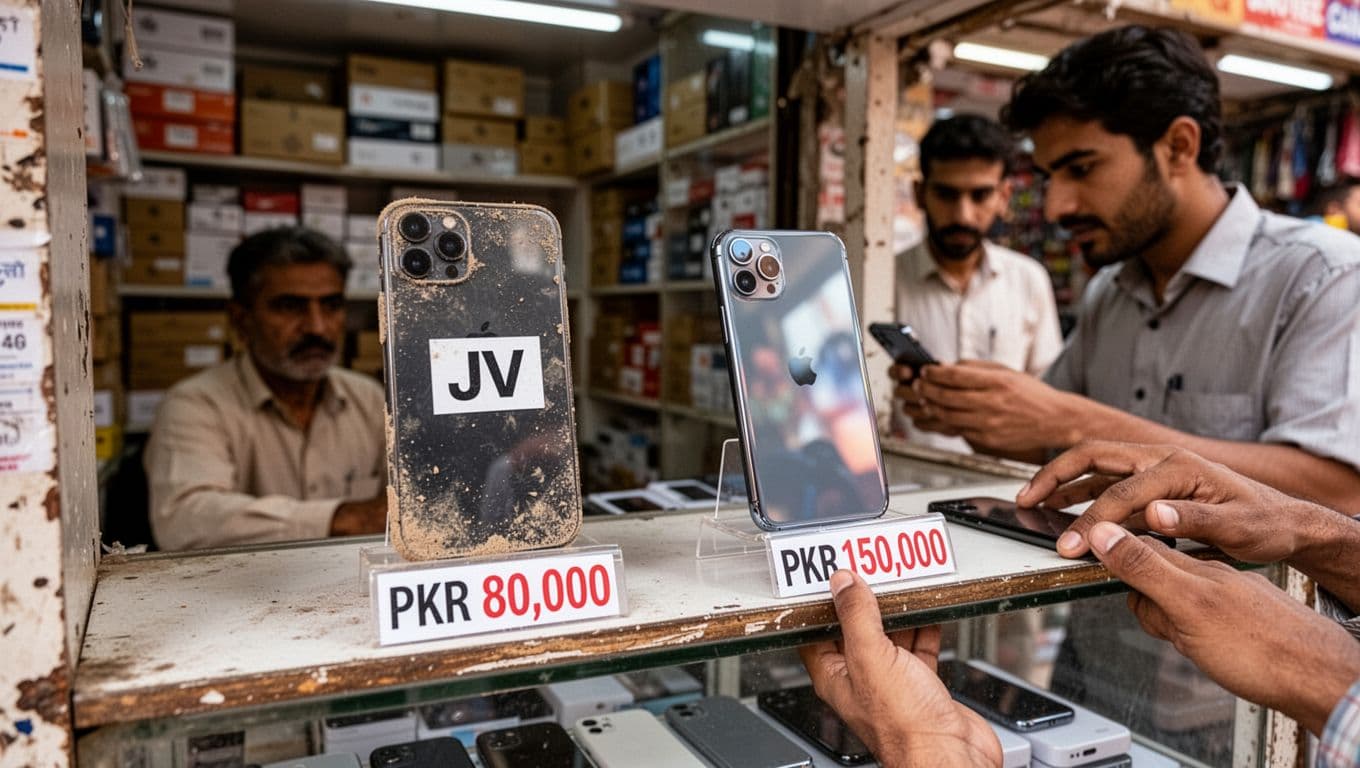
Resale is where many JV buyers feel the biggest regret. In 2026, most buyers in Pakistan ask two questions first: “PTA approved?” and “Factory unlocked?” If your answer is “JV,” the mood changes.
Even when the phone looks perfect, the label creates doubt:
- Buyers assume SIM problems.
- They fear PTA blocking.
- They expect hidden issues after updates.
- They bargain hard because they know demand is low.
As a result, exchange offers and buyback prices drop sharply. You might save today, then lose more at resale time.
If you want a broader perspective on common JV problems in local buying and selling, this post covers related points: https://proinfodesk.com/7-disadvantages-of-jv-iphones-in-pakistan/.
Why most buyers avoid JV in 2026 (even if the phone looks perfect)
The limitation isn’t cosmetic, it’s built into the phone’s network status. A clean body, a bright display, and a strong battery can’t fix carrier lock and PTA risk.
JV models may suit a narrow group, like someone who needs an iPhone only for Wi-Fi at home. On the other hand, anyone who needs calls, OTPs, or mobile data should avoid it.
FAQ: JV iPhones in Pakistan (2026)
Are JV iPhones original Apple iPhones?
Yes, many are original iPhones. The problem is not “fake,” it’s network lock and status. The phone can still be a bad deal.
Can a JV iPhone work on Jazz, Zong, Ufone, or Telenor?
Sometimes it won’t work at all. Other times, a patch makes it work briefly. Still, there’s no guarantee it will stay stable after updates or resets.
Can I pay PTA tax on a JV iPhone and use it normally?
PTA payment covers legal network access, but a carrier lock can still block local SIM use. So paying PTA doesn’t always solve the JV problem.
How can I check if an iPhone is carrier-locked before buying?
Test multiple Pakistani SIMs, make a call, and check mobile data. Also check the phone’s network status in Settings if it’s visible on that iOS version.
What should I do if I already bought a JV iPhone?
First, stop assuming it will “fix itself.” Use it on Wi-Fi if that meets your needs, or sell it honestly as JV. If a shop offers an unlock, get written terms and a return window.
Conclusion
The disadvantages of JV iPhones in Pakistan 2026 come down to one thing: unstable real-world usability. Carrier lock can reject local SIMs, and PTA restrictions can turn the phone into Wi-Fi only. Then come the hidden costs, the unlock promises that don’t last, and the painful resale value.
Here’s a simple rule: if you need a SIM for calls, OTPs, and mobile data, avoid JV and choose a factory-unlocked, PTA-approved option. If you truly need only Wi-Fi, a JV phone can make sense at the right price.
Before paying, always test with a local SIM and get a clear return policy in writing.






Tech
GPT 5.4 and GPT 5.4 Thinking: Features, Differences, and How It Works
Learn what GPT 5.4 and GPT 5.4 Thinking are, their features, improvements over earlier models, and how OpenAI’s latest AI technology is transforming productivity and AI tools.

OpenAI shipped GPT 5.4 on March 5, 2026, and the buzz makes sense. This release isn’t just “a bit better.” It changes what you can realistically paste into one chat, and what the model can keep straight.
At the center of the hype is a 1 million-token context window. In plain terms, that’s enough room for book-sized inputs, long legal packs, or a large chunk of a codebase.
People are also testing GPT 5.4 Thinking, a new reasoning-focused mode that’s designed to be slower and more careful. It’s getting attention because it tends to miss fewer steps, especially on complex tasks.
The trend is also fueled by practical wins: stronger coding help, fewer obvious factual mistakes than earlier GPT-5.x models, and better long-form planning.
This guide sets expectations. You’ll learn what GPT 5.4 is, what “Thinking” means, how it works at a high level, what changed versus GPT 5.2 and GPT 5.3, who should use which mode, real examples, limits, and how to try it inside ChatGPT.
What is GPT 5.4, and what changed in this release?

 Photo by Google DeepMind
GPT 5.4 is OpenAI’s newest frontier model aimed at professional knowledge work. Think coding, research synthesis, writing under constraints, and multi-step analysis where small mistakes cost time.
You’ll see OpenAI GPT 5.4 in ChatGPT and through the API, and it’s also tied into Codex-style developer workflows (where the model helps execute software tasks, not just answer questions). Availability can depend on your plan (Plus, Team, Pro, and Enterprise rollouts tend to differ), but the key idea is that GPT 5.4 is positioned as the “default serious work” model for many users.
What changed in this release comes down to a few upgrades people feel quickly:
- Much longer context (up to 1M tokens) for reading and working across large inputs.
- Improved reasoning for multi-step tasks (directionally fewer missed steps).
- Better coding and debugging compared with earlier GPT-5.x options.
- Fewer factual errors in day-to-day use (still not perfect, but less careless).
The quick picture, what GPT 5.4 is built to do well
- Long document understanding: Review a 200-page contract pack, or summarize a quarterly report bundle with consistent terms.
- Multi-step problem solving: Build a migration plan, then turn it into tasks, then draft comms for stakeholders.
- Better instruction following: Produce a report with fixed headings, tone rules, and “must-include” points.
- Tool and agent-style tasks: Run a workflow that pulls from provided files, drafts output, then checks for gaps.
- Professional domain work: Analyze a policy for compliance risks, or sanity-check a finance model’s assumptions.
Key highlights people notice right away (1M context, stronger reasoning, better coding)
A 1 million-token context window is like giving the model a bigger desk. Instead of balancing a few pages at once, it can spread out a full stack of documents and keep referencing them.
“Improved reasoning” is less mysterious than it sounds. It usually shows up as better planning, fewer skipped steps, and stronger consistency when the task has dependencies (first do A, then B, then validate C).
Coding improvements also feel practical: clearer debugging paths, better refactors across multiple files, and fewer “looks right but won’t run” snippets. Still, extremely large context requests can cost more, run slower, and quality can vary when you push the limits.
What is GPT 5.4 Thinking, and when should you use it instead of regular GPT 5.4?
GPT 5.4 Thinking is a reasoning-focused mode for harder problems. Regular GPT 5.4 is usually faster and “good enough” for everyday writing, summaries, and quick coding help. GPT 5.4 Thinking trades speed for care.
A simple way to choose: if the task has many steps where one wrong assumption ruins the result, Thinking mode is worth it. If you just need a clean email, a summary, or a quick snippet, standard GPT 5.4 is often the better fit.
Some users like Thinking mode because it can show more of its working as a structured reasoning outline. That makes it easier to audit the logic. In other words, you can spot a bad assumption before it becomes a bad decision.
If the cost of being wrong is high, use GPT 5.4 Thinking and ask it to verify its own work.
Thinking mode in plain English, a “slow and careful” setting for hard problems
GPT 5.4 Thinking tends to spend more time planning, checking, and revising. It helps most when you need reliability more than speed, for example:
Complex debugging and root-cause analysis, tricky math or logic problems, research synthesis across many sources, policy and compliance checks, long writing with strict constraints, multi-file refactors, and multi-step business decisions with tradeoffs.
The tradeoffs are real. Responses can take longer, and the compute cost can be higher. Also, you don’t need it for simple Q&A.
How GPT 5.4 Thinking works (without the math): plan, solve, verify, then answer
At a high level, GPT 5.4 Thinking runs a loop that looks like this:
First, it confirms the goal and constraints. Next, it breaks the task into steps and pulls relevant details from the context you provided. Then it solves the problem step by step, and finally it checks for gaps or contradictions before giving you the final output.
When tools are available (like code execution, browsing in approved setups, or agent-style actions), it can use them during the “solve” phase. On longer jobs, it also tends to keep a more structured plan so it doesn’t drift.
Visible reasoning helps, but it’s not a guarantee. Always verify important facts, run the code, and sanity-check numbers.
GPT 5.4 vs GPT 5.2 vs GPT 5.3, what is actually better now?
Here’s the fast comparison most people want before they switch models.
Comparison table: GPT 5.2, GPT 5.3, and GPT 5.4 at a glance
| Category | GPT 5.2 | GPT 5.3 | GPT 5.4 |
|---|---|---|---|
| Release timing | Earlier GPT-5.x (late 2025 to early 2026) | Feb 2026 | Mar 5, 2026 |
| Best for | General use | Coding-heavy workflows | Professional knowledge work, long context |
| Reasoning | Good | Better | Best |
| Context window | Good (smaller than 1M) | Better (can reach 1M in some setups) | Best (up to 1M tokens) |
| Accuracy and errors | Good | Better | Best (directionally fewer errors) |
| Coding and debugging | Good | Best for coding focus | Best overall balance (coding plus reasoning) |
| Tool and agent workflows | Good | Better | Best (stronger long jobs and tool use) |
| Cost considerations | Lower | Varies | Higher at extreme context sizes |
| Thinking mode support | Limited or older | Improving | Strongest (GPT 5.4 Thinking) |
If you’re using GPT 5.2 or GPT 5.3 for short tasks, upgrading mainly buys you consistency and headroom. If you work with large documents, big repos, or long-running workflows, GPT 5.4 is the clearer upgrade.
GPT 5.4 Pro vs GPT 5.4 Thinking, which one fits your work?
“Pro” and “Thinking” solve different problems. A Pro tier is usually about access and performance headroom (higher limits, more consistent throughput, and better reliability on big workloads). GPT 5.4 Thinking is about the reasoning style the model uses.
So you can think of it like a car. Pro is a stronger engine and a bigger fuel tank. Thinking is choosing to drive slower on icy roads.
Availability can vary by plan (Pro or Enterprise often gets features first). Also, large context jobs can get expensive quickly, so it’s smart to reserve 1M-token runs for work that truly needs it.
Simple chooser: pick Pro, Thinking, or standard based on your task
- Standard GPT 5.4: Everyday writing, summaries, quick analysis. Example: rewrite a proposal, summarize meeting notes, draft support replies.
- GPT 5.4 Thinking: Hard multi-step work. Example: debug a complex failure path, create a compliance checklist, design an evaluation plan.
- GPT 5.4 Pro: Big workloads and higher reliability needs. Example: large code migration planning, long document review across many files, repeated batch workflows.
Real ways people are using GPT 5.4 right now (business, dev, and research)

Long context changes your workflow. Instead of feeding the model one excerpt at a time, you can provide a fuller record and ask for analysis that stays consistent.
At the same time, don’t treat any model as a safe place for sensitive data by default. Follow your company’s rules, remove personal data when possible, and use Enterprise controls if you need them.
Business and productivity workflows that benefit from a 1M token context
A practical pattern works well:
Paste the source material (reports, policies, meeting notes, contracts). Ask for a plan first (what it will do and what it needs). Then ask it to produce the deliverable and flag risks.
Common examples include: summarizing long reports into a 1-page brief, turning messy meeting notes into a project plan, drafting slide outlines from a strategy doc, comparing policies across departments, building an SOP from scattered docs, analyzing a spreadsheet export (as text or CSV), and reviewing contract clauses for missing items.
Before you use the output, check three things: quoted facts match the source, numbers add up, and recommendations fit your constraints (timeline, budget, policy).
Developers and researchers: better debugging, deeper synthesis, and longer projects

Developers use GPT 5.4 for repo-wide understanding, bug triage, writing tests, refactoring across files, and fixing front-end issues that need careful step ordering. Thinking mode can help when the bug only appears after several interactions, or when the fix needs changes across modules.
Researchers use GPT 5.4 for multi-source synthesis, outlining literature reviews, extracting claims into an evidence table, and spotting gaps in an argument. Still, citations matter. If the model claims a fact, ask it to quote from the sources you provided, or provide links in environments that support verified browsing.
If you’re building content workflows, the long-context jump also helps with scripting and editing at scale. For a practical example, see this Faceless YouTube guide using ChatGPT and Canva and adapt the workflow for GPT 5.4.
How to use GPT 5.4 Thinking in ChatGPT, plus prompts that work
Model choice matters less than many people think. What really improves results is clear context, firm constraints, and a built-in check.
Step by step: turn on GPT 5.4 Thinking and get better answers
- Open ChatGPT and select GPT 5.4 Thinking from the model picker (if your plan has access).
- Paste your context (docs, notes, code, requirements). Keep it organized with simple headings.
- Ask for a short plan first, including assumptions and unknowns.
- Approve the plan, then ask it to execute step by step (with intermediate checkpoints).
- Request a self-check (contradictions, missing requirements, and risky claims).
- Ask for a short final answer that you can copy into your doc or ticket.
Two small tips help a lot: ask it to list assumptions, and ask it to quote key lines from your provided text when it makes claims.
Prompt templates for complex tasks (planning, debugging, research, and decisions)
Use these as fill-in templates, and keep the brackets.
1) Plan then execute
Input: [paste context]
Goal: [what “done” looks like]
Constraints: [time, tone, format, must-include]
Output format: [outline, then final deliverable]
Verify: [list assumptions, then check each against context]
2) Debug with reproduction steps
Input: [error logs, steps, code snippets]
Goal: Find root cause and propose a fix
Constraints: Don’t change public APIs, add tests
Output format: Repro steps, likely cause, patch plan, tests
Verify: List risks and how to validate locally
3) Summarize long doc with risk flags
Input: [policy or contract text]
Goal: Create an executive summary
Constraints: Keep it under [X] words, use plain English
Output format: Summary, key obligations, risk flags, open questions
Verify: Quote exact lines for each risk flag
4) Compare options with a decision matrix
Input: [options, costs, requirements]
Goal: Recommend one option and justify it
Constraints: Weight factors as [weights]
Output format: Table, then recommendation, then sensitivity notes
Verify: Show which facts came from the input vs assumptions
5) Write with strict constraints and a fact-check list
Input: [notes and sources]
Goal: Draft [asset type] for [audience]
Constraints: Tone rules, banned phrases, required points
Output format: Draft, then fact-check list (what to confirm)
Verify: Mark any uncertain claims clearly
For more workflow ideas you can borrow, this roundup of Best YouTube automation tools 2025 pairs well with GPT 5.4 for content ops.
Limits and tradeoffs you should know before you rely on GPT 5.4
Even with the upgrades, GPT 5.4 isn’t a truth machine. Long context also doesn’t mean perfect understanding. The model can still misread a clause, miss a dependency in code, or invent a detail when the source is thin.
You’ll also feel the practical costs: huge inputs can raise token spend, and GPT 5.4 Thinking can add latency. On top of that, some features can be restricted by plan, region, or safety policies.
Treat outputs as drafts you can audit, not final answers you can blindly trust.
Common pitfalls: long context, higher cost, and mistakes that still happen
At extreme lengths, quality can vary. Sometimes the model focuses on the wrong section because your prompt didn’t tell it what matters most. Hallucinations can still happen, especially with niche facts or when you ask for “the latest” without providing sources.
A few guardrails reduce risk:
- Ask it to quote from provided text for key claims.
- Require it to label assumptions and separate them from facts.
- Request an uncertainty note for any claim it can’t support.
- Run a second pass that checks for contradictions and missing requirements.
- For code, run tests and add at least one new test for the fix.
If you’re curious how AI features are spreading into devices too, this overview of Pixel 10 series AI innovations and leaks shows how quickly “AI modes” are becoming standard product language.
Conclusion
GPT 5.4 is a meaningful step forward because it combines long context, stronger reasoning, and better coding in one model. The headline feature is the 1M token window, since it changes what you can analyze in a single run. When the task gets hard, GPT 5.4 Thinking is the safer choice because it plans, checks, and tends to make fewer step-level mistakes. Still, the best option depends on your tradeoff between speed and depth, and on your budget for large inputs. Try one tough task in Thinking mode, use the prompt templates above, then verify the output like you would a junior teammate’s draft. The people who win with GPT 5.4 won’t be the ones who trust it most, they’ll be the ones who review it well.
How-To Guides
How to Transfer Money From Payoneer to JazzCash or Easypaisa (2026): Fees, Limits, and Processing Time
Payoneer to JazzCash transfer in 2026, official in-app steps, fees, limits, and instant timing, plus the safe bank workaround for Easypaisa.
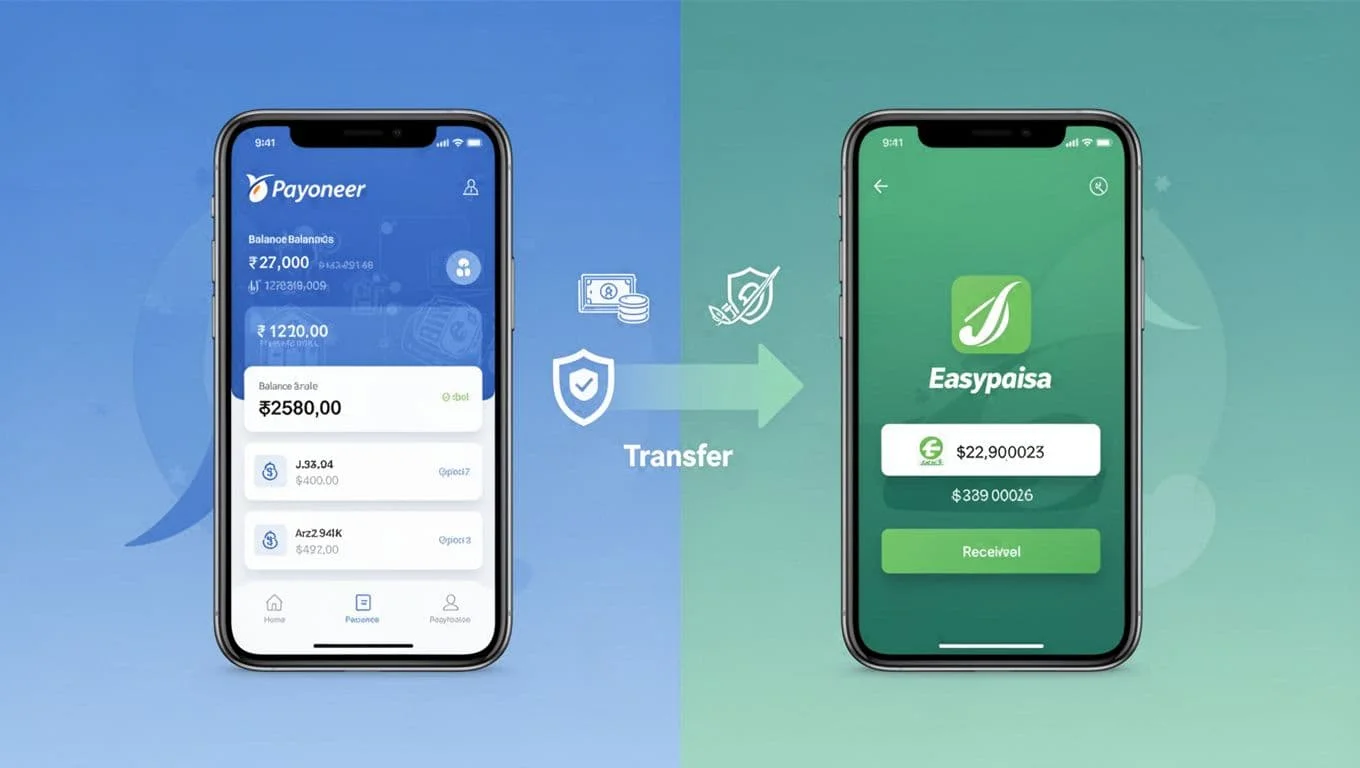
Getting paid in Payoneer is great, until you need that money in your mobile wallet today, not next week. In Pakistan, Payoneer to JazzCash is the cleanest route because JazzCash supports an official in-app Payoneer option (and it’s usually instant). Easypaisa is different. As of February 2026, there’s no official Payoneer-to-Easypaisa direct link, so you’ll need a workaround.
This guide walks you through both paths with clear steps, what fees to expect, what limits to watch, and how long each method usually takes. It also includes practical safety tips, because one wrong detail (or the wrong “exchanger”) can freeze a transfer.
This reflects February 2026 info, but fees and limits can change inside the apps, sometimes without much notice. Always read the confirmation screen before you tap confirm.
Before you start, make sure your accounts are ready (so the transfer doesn’t fail)
 Mobile wallet transfers usually succeed when your identity and security settings are fully set up, created with AI.
A transfer failure often has nothing to do with your balance. Most issues come from account readiness and identity checks. Start by confirming your Payoneer account is fully verified. That usually means your ID is approved, your phone number is active, and two-step verification is turned on. If Payoneer asks for extra documents, finish that first, because withdrawals can get blocked mid-process.
Next, check your JazzCash mobile account status. The Payoneer option is meant for a registered JazzCash mobile account tied to your CNIC. If you’re using a basic or partially verified wallet, upgrade it first inside the app so limits don’t stop you at the last step. For official context on the partnership feature, see JazzCash’s page on Payoneer-powered freelance payments.
Also, treat your connection like part of the “setup.” A weak internet signal can cause session timeouts during linking, which looks like a failed login. Update both apps, set up MPIN or biometrics, and avoid switching between Wi-Fi and mobile data while confirming.
Finally, think about currency timing. Keep your Payoneer balance in USD if that’s how you get paid. The app will show your PKR conversion rate at confirmation, and that moment matters. A small test withdrawal (like $1 to $5, if available) is the easiest way to confirm everything works before you move a larger amount.
What details must match across Payoneer and mobile wallets?
Most wallet problems come down to mismatched identity details. Your Payoneer profile name should match your JazzCash or bank account name as closely as possible. Small differences (missing middle name, swapped order, extra initials) can trigger reviews. Your CNIC details matter too, because JazzCash accounts are tied to a verified identity. Your active phone number must also be reachable, since OTPs and security prompts depend on it.
If something doesn’t match, fix it before you try again:
- Update your name details in Payoneer (or submit the requested documents).
- Re-check JazzCash profile info and CNIC verification level in the app.
- If a change won’t save, contact support and keep screenshots handy.
A clean match keeps transfers fast. A mismatch can cause delays, reversals, or repeated security checks.
Common reasons transfers get stuck, and quick fixes
When a transfer hangs, start with the simple stuff. OTP failures are common when the SIM is not in your phone, the inbox is full, or the network is congested. App session timeouts also happen when you idle too long on the confirmation screen.
Other frequent causes include using the wrong wallet type (for example, an unverified wallet tier), hitting daily limits, or triggering a security review after too many login attempts.
Do this first, in order: refresh your internet, update the app, retry after 10 to 30 minutes, and double-check your limits inside JazzCash. If it still fails, clear the app cache, then try again. When contacting support, share the transaction ID and the exact time of the attempt.
If the app shows a rate and fee preview, then fails at confirmation, the issue is usually OTP, limits, or a security check, not your balance.
How to transfer from Payoneer to JazzCash (official method, usually instant)
 An illustration of USD-to-PKR conversion during a mobile wallet transfer, created with AI.
If you want speed with the least hassle, JazzCash is the best-supported route in 2026. The process has two parts: link Payoneer once, then withdraw whenever you need PKR.
You’ll see the withdrawal amount entered in USD, then the app shows an estimated PKR amount with the exchange rate. That exchange rate is the real “price tag” of the transfer, so don’t rush past it. After confirmation (usually with MPIN or biometrics), the money typically appears in your JazzCash balance right away.
For additional step visuals (helpful if your menus look different), you can compare your flow with this step-by-step Payoneer to JazzCash linking guide. Menu names can vary slightly by app version, but the idea stays the same.
Link Payoneer to JazzCash one time in the JazzCash app
Linking is a one-time setup per Payoneer account. Do it in a calm moment, not when you’re rushing to pay a bill.
- Open the JazzCash app and sign in.
- Find the Payoneer option (often inside Services, Freelance Payments, or a similar section).
- Tap Link account.
- Sign in with your Payoneer email or user ID and password.
- Complete any two-step verification prompts.
- Wait for the success message, then return to JazzCash.
Keep your credentials private. Don’t share your Payoneer password, and never forward OTP codes to anyone, even if they claim to be “support.”
Withdraw to JazzCash in seconds: fees, limits, and processing time in 2026
In February 2026, the JazzCash route is generally real-time, meaning you often receive PKR in your wallet right after confirmation.
Here’s what to expect in the app flow:
- Minimum withdrawal: Many users can withdraw as low as $1 (some accounts may show a higher minimum depending on status and app updates).
- Limits: JazzCash commonly shows wallet limits inside the Payoneer withdrawal screen. In many cases, users see figures like PKR 150,000 daily and PKR 500,000 monthly, but your limits can be lower based on verification level and account history.
- Fees: JazzCash promotes this feature with strong perks, and it may not show a separate JazzCash service fee. However, Payoneer may apply a withdrawal fee that can appear as around 2% during confirmation (always verify on your screen). The exchange rate also matters because the FX spread can cost more than a visible fee.
If you want a better feel for Payoneer’s fee types (withdrawal fees, minimums, FX costs), this breakdown of Payoneer charges and hidden FX costs is a useful reference. Your actual numbers still depend on your account and the confirmation screen.
A simple habit saves money: compare the PKR rate shown at confirmation with a bank’s public rate, then decide if it’s “good enough” for today. If the rate looks weak, wait and try later, especially during high-volatility days.
How to get Payoneer money into Easypaisa (no direct link in 2026)
 Moving funds through a bank app is the most dependable bridge to Easypaisa, created with AI.
If you’re searching for a one-tap Payoneer to Easypaisa button, you’ll probably be disappointed. As of February 2026, there’s no official direct Payoneer-Easypaisa integration in the mainstream app flows. This matches what many payment guides also state, including this overview on whether Payoneer connects to Easypaisa.
That doesn’t mean you’re stuck. It just means the safest path uses a bank as the bridge. Think of it like changing flights. A direct flight is nicer, but a short layover still gets you there, and it’s often the lowest-risk option.
Safe route: Payoneer to Pakistani bank, then move money to Easypaisa
This is the most reliable approach when you need Easypaisa specifically.
- In Payoneer, choose Withdraw to Bank (your local PKR bank account).
- Select the saved bank account (or add it if you haven’t).
- Enter the withdrawal amount and review the rate and fees.
- Confirm with security prompts (OTP or two-step verification).
- Wait for the bank credit (commonly 2 to 5 business days, and weekends can slow it down).
- From your bank app, send money to Easypaisa using IBFT or a bank transfer option to a mobile account number (often instant once your bank supports it).
On fees, Payoneer commonly shows a 2% withdrawal fee (with a minimum such as $2.50 on some accounts), and currency conversion can add cost depending on the rate used. The exact fee and the exact rate appear before you submit. Bank-to-wallet transfer fees vary by bank and account type, so check your bank’s schedule inside the app.
If you’re building a broader “get paid from abroad” setup, it also helps to understand your alternatives. This guide on legal PayPal alternatives in Pakistan explains why many freelancers end up using Payoneer and local rails.
Faster but riskier option: third-party exchangers for Easypaisa (and when to avoid them)
Some people use exchangers that “swap” Payoneer funds to PKR and send money to Easypaisa. The appeal is speed. The risk is obvious: you’re trusting a third party with your money.
These services usually earn from a worse exchange rate, a service fee, or both. The total cost can be higher than the bank route, even when the transfer looks instant. Processing time ranges from a few minutes to hours, depending on whether the service is automated or manual. For an example of how these listings are presented, you can look at a marketplace page like Payoneer to Easypaisa exchange listings. Use it as context, not as a guarantee of safety.
Avoid exchangers when:
- You’re asked for your Payoneer password or OTP.
- The rate is “too good” compared to everyone else.
- They won’t share a clear process, timing, and proof of transfer.
If you still use one, start with a small test amount, keep screenshots, and save every transaction ID.
Official integrations reduce fraud risk. With exchangers, you’re the fraud department, so act like one.
Fees, limits, and timing at a glance (plus smart ways to reduce cost)
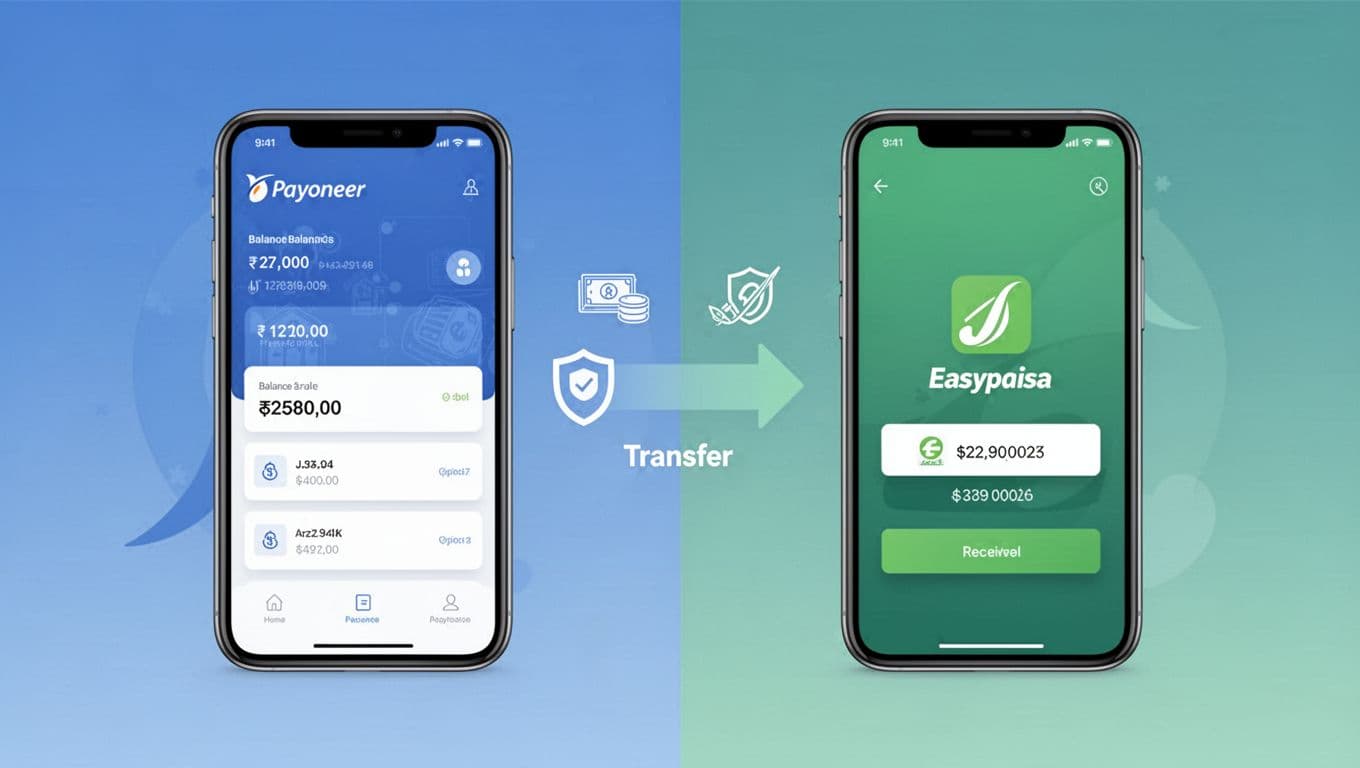 Two common routes for receiving Payoneer funds into mobile wallets, created with AI.
Here’s the quick comparison most people need before choosing a route.
| Route (2026) | Processing time | What you pay most often | Limits (typical) | Best for |
|---|---|---|---|---|
| Payoneer to JazzCash (official) | Usually instant | Payoneer withdrawal fee shown at checkout (often around 2%) plus FX spread | Shown inside JazzCash, depends on verification (many users see daily and monthly caps) | Fast cash, bill payments, local transfers |
| Payoneer to bank, then Easypaisa | 2 to 5 business days to bank, then often instant to wallet | Payoneer bank withdrawal fee and FX rate, bank transfer fees vary | Bank and Easypaisa limits vary by verification level | People who must receive in Easypaisa |
| Third-party exchanger to Easypaisa | Minutes to hours | Rate spread plus service fee, varies by provider | Provider-dependent | Emergency only, with caution |
To reduce total cost, focus on what you control. Withdraw larger amounts less often (while staying under limits). Watch the FX rate right before you confirm, because that can swing your PKR result more than a small fee. For bank withdrawals, avoid starting on weekends if you need the money fast.
Best choice by situation is simple: if you need instant wallet funds, pick JazzCash. If you need Easypaisa for a specific use, use the bank bridge. If it’s an emergency and you understand the risk, an exchanger might work, but treat it like a high-risk trade.
Conclusion
In 2026, the clearest path is still the same: Payoneer to JazzCash is the official, usually instant option, while Easypaisa needs a bank transfer bridge, or a third-party exchanger with real risk. Before you confirm any withdrawal, pause on the final screen and check the fee line and the PKR exchange rate. That’s where most “hidden cost” lives.
Start with a small test transfer, especially after changing your phone, SIM, or app version. Save these steps, and if a transfer fails, check your wallet limits and verification status first. A clean profile match fixes more problems than people expect.

Introduction to GPT 5:A New Era of AI Starts Now
OpenAI has officially released GPT-5, and it’s not just an upgrade; it’s a step forward in the future of AI. GPT-5 was made to combine never-before-seen capability with unrivaled flexibility. Its goal is to change the way people engage with AI.
This paradigm gives developers, researchers, marketers, and regular users a better, faster, and more dependable experience than anything else.
In this article, we’ll talk about the main characteristics, unique skills, and reasons why GPT-5 is already being called the most powerful AI model in the world.
One AI System—No More Switching Models
The smart routing system is one of the most groundbreaking new features in GPT-5.
In the past, consumers had to choose between multiple models for certain activities, including fast, big, or cheap. Now, GPT-5 automatically picks the best version for your question: Deep Reasoning Mode turns on when you need to solve a complex problem in more than one stage. Speed Mode: Uses lighter versions for jobs that are quick and easy. Efficiency Mode: This mode balances performance and resource use without lowering quality. With this unified architecture, you always receive the best results, whether you’re looking for brief data or making complicated applications.
PhD-Level Intelligence with 45% Fewer Mistakes
OpenAI says that GPT-5 goes from being “high-schooler” smart (GPT-3) to being a PhD-level expert.
It’s not only smarter; it’s also a lot more accurate: There are 45% fewer factual mistakes than in GPT-4o. Better at knowing itself—knows when it doesn’t know the answer. Better logical reasoning for use in school, research, and work. This means that GPT-5 is a much more reliable partner for important tasks like making decisions with a lot at risk, doing scientific research, and developing commercial plans.
GPT 5 is Your own AI coder and creative partner
For developers and designers, GPT-5 is a total game-changer: One-Prompt App Creation: You can make whole websites, apps, and even games using only one descriptive prompt. Aesthetic-Aware Design makes layouts and user interfaces that not only work, but also look good. Advanced Debugging lets you easily navigate huge codebases and fix hard bugs. Writers, marketers, and content creators may also use GPT-5 to brainstorm, write, and improve content in a way that is similar to how humans do it. This makes it a real creative partner.
Integration of all tools into one
Everything you need is in one spot with GPT 5. It combines all of OpenAI’s features into one smooth interface, so you don’t have to switch tabs or modes anymore: Web browsing in real time for data. DALL-E 3 makes images for creative purposes. Voice Interaction for talking like a real person. Collaborative Canvas lets you brainstorm and develop together in real time. This unified method saves time and makes it easy to mix text, graphics, and interactive elements in unique ways.
Personalization Like Never Before
GPT-5 doesn’t just understand what you ask; it also learns about you. You can choose its tone and style by using built-in “personalities”: Cynic: funny and doubtful. Robot: Straightforward and formal. Listener: understanding and communicative. Nerd: full of details and technological stuff. This makes GPT 5 more like a person and lets you change it to fit your needs, making it great for anything from casual conversations to professional advice.
What Makes GPT-5 a Paradigm Shift
GPT-5 is not merely faster or bigger like most model improvements. It is also more human-aligned in a fundamental way: Accuracy and trustworthiness that have never been seen before. Easily adapting to the difficulty of the task. One interface with real multi-modal capability. diverse requirements call for diverse ways of interacting. Everyone can use the latest AI for free, which makes AI technology more accessible.
Final Thoughts: The Future of AI Is Here
GPT-5 is the beginning of a new era in the history of AI. It is the most advanced AI model to date since it can think deeply, reply quickly, make things look beautiful, and change without any problems. As businesses look into what this technology can do, from making software automatically to analyzing data in real time, one thing is for sure: Chat GPT 5 will change the way we work, learn, and make things.
Frequently Asked Questions About GPT-5
1. What is GPT-5?
GPT-5 is OpenAI’s latest and most advanced AI model, designed to deliver higher accuracy, faster responses, and a unified experience by automatically selecting the best model for each task.
2. What makes GPT-5 better than GPT-4?
GPT-5 has 45% fewer factual errors, offers PhD-level reasoning, includes a smart routing system for optimal performance, and integrates all AI tools like web browsing, image generation, and voice interaction into one interface.
3. Can GPT-5 create apps and websites?
Yes. GPT-5 can build complete apps, websites, and even games from a single descriptive prompt, with both functional code and aesthetic design choices.
4. Does GPT-5 have personalization options?
Yes. GPT-5 allows users to choose from preset personalities like Cynic, Robot, Listener, and Nerd, tailoring tone and style to individual preferences.
5. Is GPT 5 available for free?
OpenAI has made GPT 5’s core capabilities available to free users, giving wider access to its powerful reasoning, creation, and research features.

GPT 5.4 and GPT 5.4 Thinking: Features, Differences, and How It Works

Umrah Visa Check Guide for Pakistanis (2026): Confirm Status and Verify Your eVisa

Germany Job Seeker Visa Checklist (2026): Documents, Translations, Copies, and Common Missing Items

A New Era in Space Exploration: Pakistan’s First Lunar Mission Takes Flight

How to Get Your Family Registration Certificate (FRC) NADRA in 2025

Sell your class notes| Online earning in Pakistan for students
-
 Online earning4 weeks ago
How to Create a Wise Account From Pakistan (2026): What Works, What Doesn’t, and Safer Options
-

 How-To Guides3 weeks ago
How To Convert Physical SIM To eSIM On iPhone (2026 Updated Guide)
-

 Online earning4 weeks ago
Best Online Earning Websites in Pakistan 2026 (Real, Legit, No Shortcuts)
-
Online earning4 weeks ago
PayPal Account in Pakistan (2026): Legal Ways to Receive Payments, Best Alternatives, and Withdrawal Options
-
 How-To Guides3 weeks ago
How to Transfer Money From Payoneer to JazzCash or Easypaisa (2026): Fees, Limits, and Processing Time
-

 Visa3 weeks ago
Maldives Visa for Pakistanis (2026): Visa on Arrival, Requirements, and Airport Tips
-

 Visa2 weeks ago
How to Get a Germany Work Permit Visa From Pakistan (2026 Guide)
-

 Visa3 weeks ago
Qatar Visa for Pakistanis (February 2026): Visa on Arrival Rules, Hayya eVisa, and Backup Options