
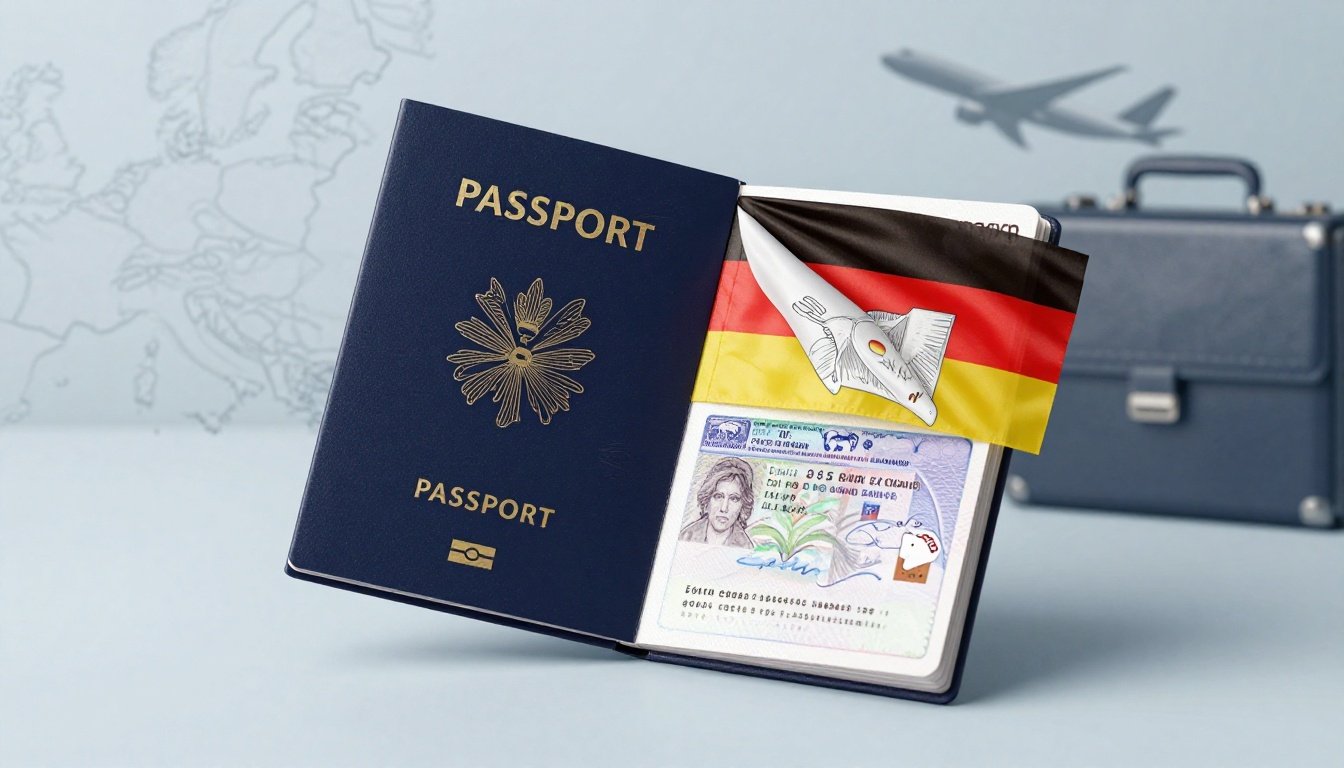
Planning to move to Germany for work from Pakistan can feel like assembling a puzzle with missing pieces. The good news is that the process becomes clear once you pick the right visa route and prepare your paperwork early.
This 2026 guide explains the main options, what you need before you apply, and the exact steps from Pakistan. Most people fall into two paths: (1) you already have a German job offer (Skilled Worker or EU Blue Card route), or (2) you need time in Germany to search (Opportunity Card or Job Seeker Visa).
If you start document prep now, you’ll avoid the delays that stop many applications. You can do this, but only if you treat your paperwork like a project, not a last-minute task.
Pick the right Germany visa route based on your situation
Before you book any appointment, decide what you’re applying for. Germany doesn’t have “one” work permit visa. It has different residence titles based on your job offer, qualification level, and plan after arrival.
Here’s a plain-language comparison to help you choose.
| Route | Best for | Job offer required? | Time allowed | Work allowed while searching | Key 2026 numbers |
|---|---|---|---|---|---|
| Skilled Worker (qualified professional) | Degree or vocational training, matched job | Yes | Usually up to 4 years | Not applicable | Age 45+ first time: €55,770 salary rule (or pension proof) |
| EU Blue Card | University degree and higher-paying role | Yes | Linked to contract, path to faster PR | Not applicable | Minimum salary: €45,630 (2026), Age 45+ rule can still apply |
| Opportunity Card (Chancenkarte) | You want to job hunt in Germany | No | Up to 1 year | Yes, up to 20 hours/week plus trial jobs | Funds: €12,324, Fee: €75 |
| Job Seeker Visa | Traditional job search route | No | Up to 6 months | Generally no regular employment | Funds required (show enough for stay) |
The simplest rule is this: if you have a strong job contract, apply as a worker. If you don’t, apply for time to search, but expect tougher questions about money and planning.

If you already have a job offer, apply as a skilled worker (or EU Blue Card when it fits)
A “job offer” means a real contract or binding offer from a German employer, not a casual email. Your role should be qualified and connected to your training and experience. Consulates often look for clarity on salary, weekly hours, start date, and job duties.
For the Skilled Worker visa, Germany expects proof that you’re qualified, usually through a recognized university degree or at least two years of vocational training. The residence permit commonly matches your contract and can be granted for up to four years.
The EU Blue Card is usually the better fit when your job pays well and your degree is recognized. It can also shorten your path to permanent residency in Germany (often cited as 21 to 33 months depending on language level and other factors). Still, the Blue Card is not “automatic.” Your contract and qualification recognition must align.
If you’re 45 or older and applying for the first time for qualified employment in Germany, a salary threshold can apply. As of the 2026 figures referenced in official guidance, the gross annual salary should be at least €55,770 or you must show adequate pension provision. That number trips up many applicants who otherwise qualify.
Regulated professions can add an extra layer. Doctors, nurses, engineers in certain roles, and similar fields may need licensing or formal approval before a visa decision. Requirements vary by job and federal state, so plan extra time if your profession is regulated.
A strong contract is only half the story. The other half is proving your qualification matches German standards.
If you don’t have a job offer yet, use the Opportunity Card or Job Seeker Visa
If you can’t secure a job from Pakistan, Germany offers two main “search first” routes.
The newer option is the Opportunity Card (Chancenkarte). In 2026, it can allow you to stay in Germany for up to one year to search for work. It also allows part-time work up to 20 hours per week, which can help you cover costs and get local experience. In addition, you can do short trial jobs of up to two weeks per employer, which is useful for interviews that turn into practical tests.
However, Germany wants proof that you can support yourself. A common method is a blocked account. For the Opportunity Card, the financial proof figure is €12,324 for the year. You may also qualify with other acceptable proof, such as a sponsor declaration, depending on your case and consulate instructions.
Germany also checks that you’re prepared for the job market. Applicants often support their application with a clear CV, a job search plan, and language proof. Current guidance mentions language such as A1 German or B2 English being used to meet criteria for the Opportunity Card, depending on how you qualify.
The Job Seeker Visa is the older route. It typically allows six months in Germany to find a job, and then you switch to a work residence permit after you sign a contract. It can be a good fit if your degree is clearly recognized and you have a focused target role. On the other hand, if you want more time and the ability to work part-time while searching, the Opportunity Card often feels more practical.
Get your documents ready before you apply (this is where most delays happen)
Most refusals and delays aren’t about your talent. They’re about paperwork. A missing stamp, mismatched name spelling, or unclear proof of funds can slow everything down.
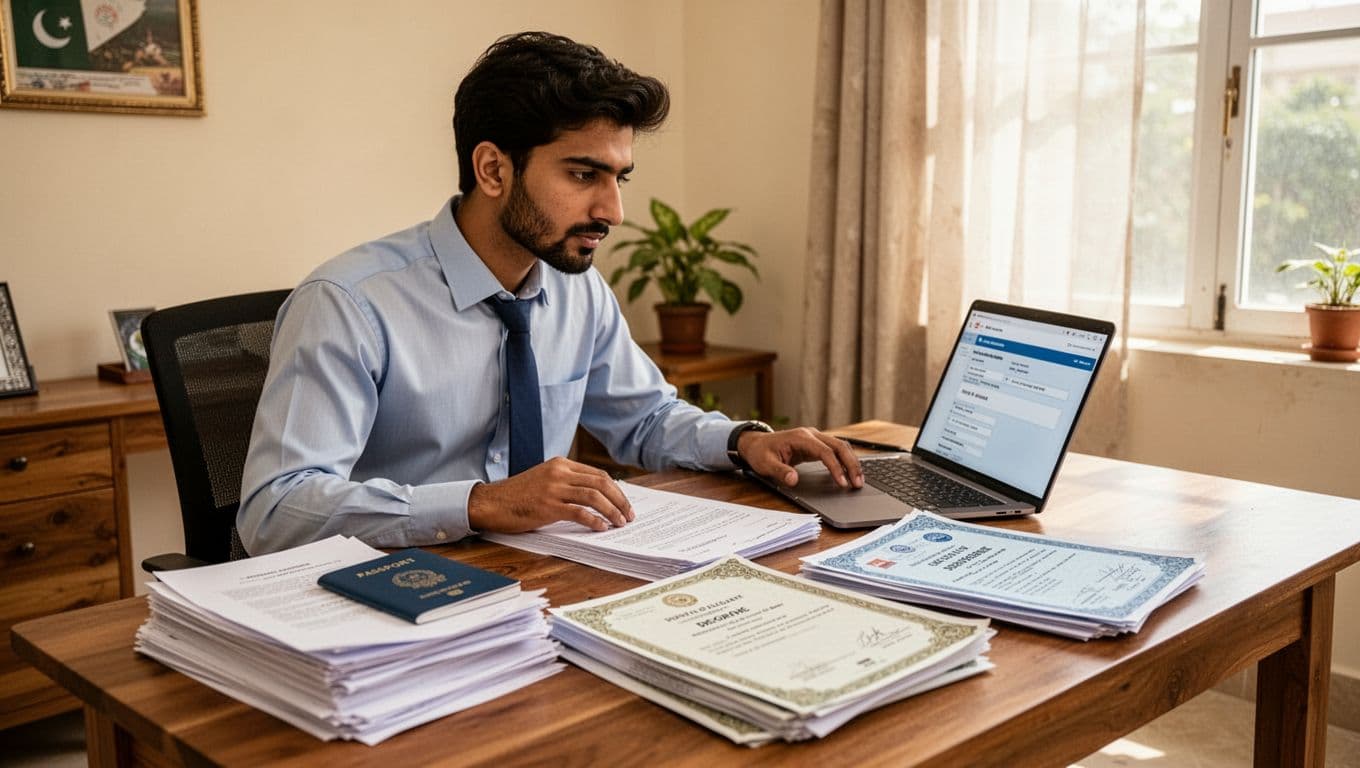
Start by standardizing your identity details. Use the same name order and spelling across your passport, CNIC, degrees, and experience letters. If your university used a different spelling, add an explanation letter and supporting proof.
Next, make your document set easy to scan. Use clean photocopies, keep originals safe, and bring duplicates. A simple habit helps: keep one folder for originals, one for copies, and one for “extra” backups. If the consulate asks for an extra copy on the spot, you won’t panic.
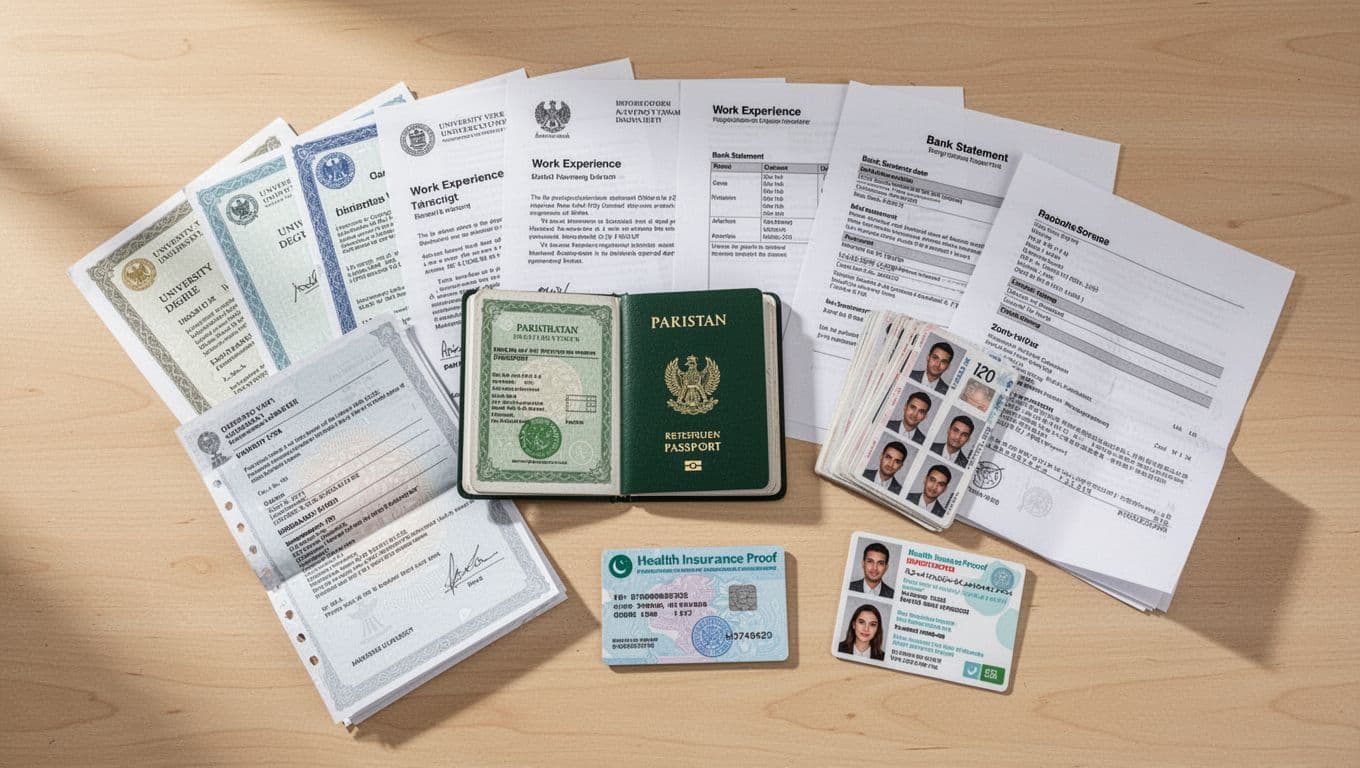
Core documents most applicants from Pakistan will need
Requirements can vary by visa type, but most Pakistani applicants prepare a similar core set:
- Valid Pakistani passport: Keep at least six months validity to avoid last-minute issues.
- Visa application forms: Some categories use online submission steps, so follow the category instructions carefully.
- Biometric photos: Use fresh photos that meet the visa photo standard.
- CV (resume): A German-style CV can help, especially if it’s clean and factual.
- Education documents: Degrees and transcripts matter because your qualification drives eligibility.
- Work experience letters: Use letters that confirm your title, duties, dates, and full-time or part-time status.
- Job contract or job search plan: Skilled Worker and Blue Card applications need a contract. Opportunity Card and Job Seeker cases should include a clear job hunt plan.
- Health insurance proof: Provide the required coverage for entry, plus longer coverage if your route requires it. Travel insurance is often shown with €30,000 coverage for the visa period.
- Proof of funds: This could be bank statements (often recent months), proof of a blocked account, salary slips, or a sponsor type declaration if accepted.
- Language certificates (if used): For Opportunity Card criteria, language proof can matter (for example, A1 German or B2 English as referenced in current guidance).
- Pakistani supporting documents: Some checklists request CNIC copy and a Family Registration Certificate (FRC) color copy for family details.
If you need an FRC, use a reliable process, because errors there cause stress later. This guide can help: NADRA Family Registration Certificate for visa applications.
Also plan for translations and attestations if your appointment instructions ask for them. Don’t translate everything by default. Translate what the category checklist requests, because each extra step costs time.
How to prove your qualification is recognized in Germany
Germany cares about recognition because the work permit is tied to skill level. In simple words, Germany wants to confirm your degree or vocational training is equivalent to a German qualification.
“Equivalent” doesn’t mean identical course names. It means your program level, duration, and content match what Germany expects for that profession. This step can take time, so start early.
If your visa route requires recognition proof, treat it like a required document, not a “nice to have.” Bring printed proof to your appointment, and also keep a digital copy ready. If you’re applying as a skilled worker, the consular officer may compare your job role to your recognized qualification. A mismatch can lead to extra questions or delays.
For IT roles, Germany has also allowed certain experienced specialists to qualify with strong experience even without a classic degree in some cases. Still, you should expect scrutiny. Clear experience letters, realistic duties, and consistent timelines help.
Apply from Pakistan step by step, from online form to biometrics
Once your route and documents are ready, the process becomes straightforward. The key is to apply under the correct category and present a clean case.
Many applicants start online through the Consular Services Portal (digital.diplo.de), then attend an in-person appointment for biometrics. Depending on your location and category, you may also use appointment options through German missions in Pakistan, including the German Consulate-General in Karachi (and in some cases Islamabad, based on category and jurisdiction).
Book the right category, submit your application, and attend your appointment
Follow the steps in order so you don’t waste weeks in the wrong queue:
- Choose the correct visa category: Typical categories include skilled worker with a degree, skilled worker with a vocational qualification, EU Blue Card, Job Seeker Visa, or Opportunity Card (Chancenkarte).
- Complete the online steps (if required): Upload documents where the category asks for them. Don’t combine unrelated pages into messy files.
- Book your appointment: Pick the location and category that matches your case. If you book the wrong type, you may be turned away.
- Pay the visa fee: Fees can vary by visa type and mission. The Opportunity Card fee is €75 per current guidance.
- Attend the appointment and give biometrics: You’ll submit documents and provide fingerprints and a photo.
- Keep proof of submission: Save your appointment confirmation, receipts, and any reference numbers.
Small details can prevent rejection. Make sure the job contract is readable and complete. Confirm salary and weekly hours are clearly stated. If you’re using bank statements, show consistent balances and clear sources of funds. For blocked accounts or sponsor proof, bring the official confirmation, not just screenshots.
Think like the officer: your file should answer questions before they’re asked.
Processing times, after-approval steps in Germany, and what to do if you get refused
Processing times vary, but current guidance commonly cites 2 to 3 months after biometrics for many work and search routes. Some cases move faster, while regulated professions and recognition issues can take longer.
After approval, your visa lets you enter Germany and complete the final steps on German soil. Your first week matters. Handle these tasks early, because delays can affect your residence permit timeline:
- Register your address within 2 weeks at the local registration office (often called the Einwohnermeldeamt or Bürgeramt, depending on city).
- Book the immigration office appointment (Ausländerbehörde) to receive your residence permit card and confirm your work authorization conditions.
- Keep insurance active and carry your registration confirmation, because offices often request it.
If you get refused, stay calm and read the refusal letter carefully. Officers usually point to the gap, such as weak funds proof, missing recognition evidence, unclear job duties, or documents that don’t match. Fix the exact issue, then reapply, or follow the appeal instructions listed in the refusal notice if that’s the better route for your case.
Most importantly, don’t reapply with the same file. Change what needs to change, and make it obvious.
Conclusion
Getting a Germany work permit visa from Pakistan is manageable when you follow a simple plan. First, choose the right route, either a job-offer visa (Skilled Worker or EU Blue Card) or a search visa (Opportunity Card or Job Seeker). Next, confirm your qualification recognition early, because that step can take time. Then prepare solid proof of funds and health insurance, apply through the portal or your consulate appointment, and complete biometrics. After landing, register your address within two weeks and move quickly to the residence permit.
Your best next move is practical: start collecting documents this week, fix name inconsistencies, and book the correct appointment category as soon as you qualify. The earlier you build your file, the smoother your Germany plan becomes.