
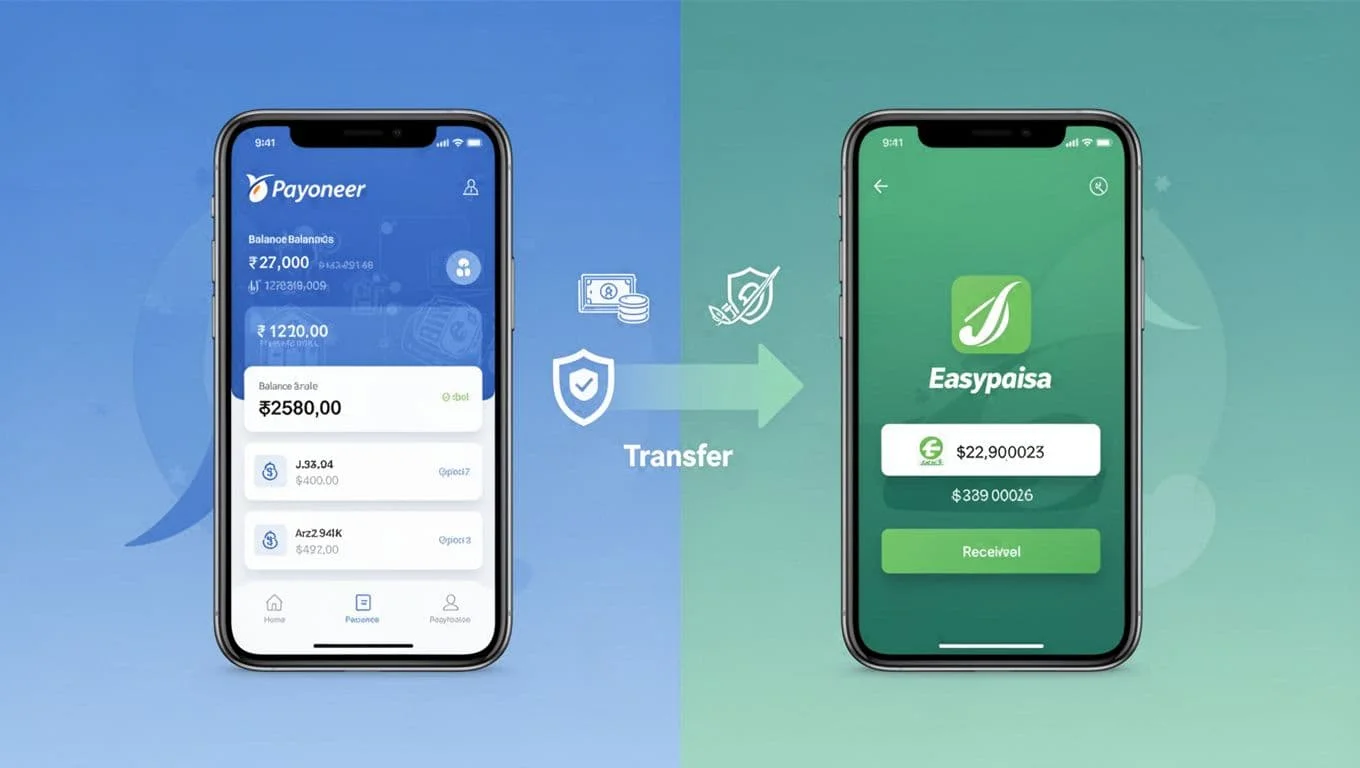
Getting paid in Payoneer is great, until you need that money in your mobile wallet today, not next week. In Pakistan, Payoneer to JazzCash is the cleanest route because JazzCash supports an official in-app Payoneer option (and it’s usually instant). Easypaisa is different. As of February 2026, there’s no official Payoneer-to-Easypaisa direct link, so you’ll need a workaround.
This guide walks you through both paths with clear steps, what fees to expect, what limits to watch, and how long each method usually takes. It also includes practical safety tips, because one wrong detail (or the wrong “exchanger”) can freeze a transfer.
This reflects February 2026 info, but fees and limits can change inside the apps, sometimes without much notice. Always read the confirmation screen before you tap confirm.
Before you start, make sure your accounts are ready (so the transfer doesn’t fail)
 Mobile wallet transfers usually succeed when your identity and security settings are fully set up, created with AI.
A transfer failure often has nothing to do with your balance. Most issues come from account readiness and identity checks. Start by confirming your Payoneer account is fully verified. That usually means your ID is approved, your phone number is active, and two-step verification is turned on. If Payoneer asks for extra documents, finish that first, because withdrawals can get blocked mid-process.
Next, check your JazzCash mobile account status. The Payoneer option is meant for a registered JazzCash mobile account tied to your CNIC. If you’re using a basic or partially verified wallet, upgrade it first inside the app so limits don’t stop you at the last step. For official context on the partnership feature, see JazzCash’s page on Payoneer-powered freelance payments.
Also, treat your connection like part of the “setup.” A weak internet signal can cause session timeouts during linking, which looks like a failed login. Update both apps, set up MPIN or biometrics, and avoid switching between Wi-Fi and mobile data while confirming.
Finally, think about currency timing. Keep your Payoneer balance in USD if that’s how you get paid. The app will show your PKR conversion rate at confirmation, and that moment matters. A small test withdrawal (like $1 to $5, if available) is the easiest way to confirm everything works before you move a larger amount.
What details must match across Payoneer and mobile wallets?
Most wallet problems come down to mismatched identity details. Your Payoneer profile name should match your JazzCash or bank account name as closely as possible. Small differences (missing middle name, swapped order, extra initials) can trigger reviews. Your CNIC details matter too, because JazzCash accounts are tied to a verified identity. Your active phone number must also be reachable, since OTPs and security prompts depend on it.
If something doesn’t match, fix it before you try again:
- Update your name details in Payoneer (or submit the requested documents).
- Re-check JazzCash profile info and CNIC verification level in the app.
- If a change won’t save, contact support and keep screenshots handy.
A clean match keeps transfers fast. A mismatch can cause delays, reversals, or repeated security checks.
Common reasons transfers get stuck, and quick fixes
When a transfer hangs, start with the simple stuff. OTP failures are common when the SIM is not in your phone, the inbox is full, or the network is congested. App session timeouts also happen when you idle too long on the confirmation screen.
Other frequent causes include using the wrong wallet type (for example, an unverified wallet tier), hitting daily limits, or triggering a security review after too many login attempts.
Do this first, in order: refresh your internet, update the app, retry after 10 to 30 minutes, and double-check your limits inside JazzCash. If it still fails, clear the app cache, then try again. When contacting support, share the transaction ID and the exact time of the attempt.
If the app shows a rate and fee preview, then fails at confirmation, the issue is usually OTP, limits, or a security check, not your balance.
How to transfer from Payoneer to JazzCash (official method, usually instant)
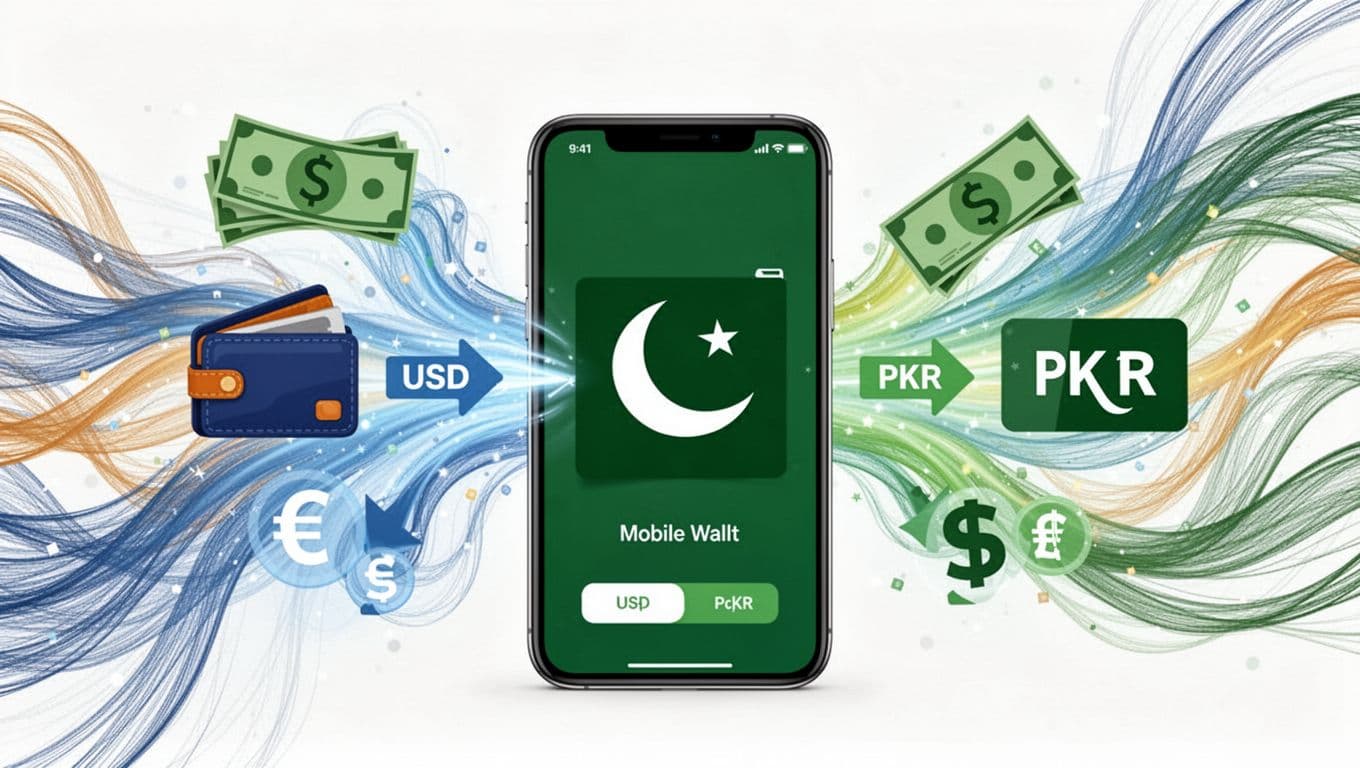 An illustration of USD-to-PKR conversion during a mobile wallet transfer, created with AI.
If you want speed with the least hassle, JazzCash is the best-supported route in 2026. The process has two parts: link Payoneer once, then withdraw whenever you need PKR.
You’ll see the withdrawal amount entered in USD, then the app shows an estimated PKR amount with the exchange rate. That exchange rate is the real “price tag” of the transfer, so don’t rush past it. After confirmation (usually with MPIN or biometrics), the money typically appears in your JazzCash balance right away.
For additional step visuals (helpful if your menus look different), you can compare your flow with this step-by-step Payoneer to JazzCash linking guide. Menu names can vary slightly by app version, but the idea stays the same.
Link Payoneer to JazzCash one time in the JazzCash app
Linking is a one-time setup per Payoneer account. Do it in a calm moment, not when you’re rushing to pay a bill.
- Open the JazzCash app and sign in.
- Find the Payoneer option (often inside Services, Freelance Payments, or a similar section).
- Tap Link account.
- Sign in with your Payoneer email or user ID and password.
- Complete any two-step verification prompts.
- Wait for the success message, then return to JazzCash.
Keep your credentials private. Don’t share your Payoneer password, and never forward OTP codes to anyone, even if they claim to be “support.”
Withdraw to JazzCash in seconds: fees, limits, and processing time in 2026
In February 2026, the JazzCash route is generally real-time, meaning you often receive PKR in your wallet right after confirmation.
Here’s what to expect in the app flow:
- Minimum withdrawal: Many users can withdraw as low as $1 (some accounts may show a higher minimum depending on status and app updates).
- Limits: JazzCash commonly shows wallet limits inside the Payoneer withdrawal screen. In many cases, users see figures like PKR 150,000 daily and PKR 500,000 monthly, but your limits can be lower based on verification level and account history.
- Fees: JazzCash promotes this feature with strong perks, and it may not show a separate JazzCash service fee. However, Payoneer may apply a withdrawal fee that can appear as around 2% during confirmation (always verify on your screen). The exchange rate also matters because the FX spread can cost more than a visible fee.
If you want a better feel for Payoneer’s fee types (withdrawal fees, minimums, FX costs), this breakdown of Payoneer charges and hidden FX costs is a useful reference. Your actual numbers still depend on your account and the confirmation screen.
A simple habit saves money: compare the PKR rate shown at confirmation with a bank’s public rate, then decide if it’s “good enough” for today. If the rate looks weak, wait and try later, especially during high-volatility days.
How to get Payoneer money into Easypaisa (no direct link in 2026)
 Moving funds through a bank app is the most dependable bridge to Easypaisa, created with AI.
If you’re searching for a one-tap Payoneer to Easypaisa button, you’ll probably be disappointed. As of February 2026, there’s no official direct Payoneer-Easypaisa integration in the mainstream app flows. This matches what many payment guides also state, including this overview on whether Payoneer connects to Easypaisa.
That doesn’t mean you’re stuck. It just means the safest path uses a bank as the bridge. Think of it like changing flights. A direct flight is nicer, but a short layover still gets you there, and it’s often the lowest-risk option.
Safe route: Payoneer to Pakistani bank, then move money to Easypaisa
This is the most reliable approach when you need Easypaisa specifically.
- In Payoneer, choose Withdraw to Bank (your local PKR bank account).
- Select the saved bank account (or add it if you haven’t).
- Enter the withdrawal amount and review the rate and fees.
- Confirm with security prompts (OTP or two-step verification).
- Wait for the bank credit (commonly 2 to 5 business days, and weekends can slow it down).
- From your bank app, send money to Easypaisa using IBFT or a bank transfer option to a mobile account number (often instant once your bank supports it).
On fees, Payoneer commonly shows a 2% withdrawal fee (with a minimum such as $2.50 on some accounts), and currency conversion can add cost depending on the rate used. The exact fee and the exact rate appear before you submit. Bank-to-wallet transfer fees vary by bank and account type, so check your bank’s schedule inside the app.
If you’re building a broader “get paid from abroad” setup, it also helps to understand your alternatives. This guide on legal PayPal alternatives in Pakistan explains why many freelancers end up using Payoneer and local rails.
Faster but riskier option: third-party exchangers for Easypaisa (and when to avoid them)
Some people use exchangers that “swap” Payoneer funds to PKR and send money to Easypaisa. The appeal is speed. The risk is obvious: you’re trusting a third party with your money.
These services usually earn from a worse exchange rate, a service fee, or both. The total cost can be higher than the bank route, even when the transfer looks instant. Processing time ranges from a few minutes to hours, depending on whether the service is automated or manual. For an example of how these listings are presented, you can look at a marketplace page like Payoneer to Easypaisa exchange listings. Use it as context, not as a guarantee of safety.
Avoid exchangers when:
- You’re asked for your Payoneer password or OTP.
- The rate is “too good” compared to everyone else.
- They won’t share a clear process, timing, and proof of transfer.
If you still use one, start with a small test amount, keep screenshots, and save every transaction ID.
Official integrations reduce fraud risk. With exchangers, you’re the fraud department, so act like one.
Fees, limits, and timing at a glance (plus smart ways to reduce cost)
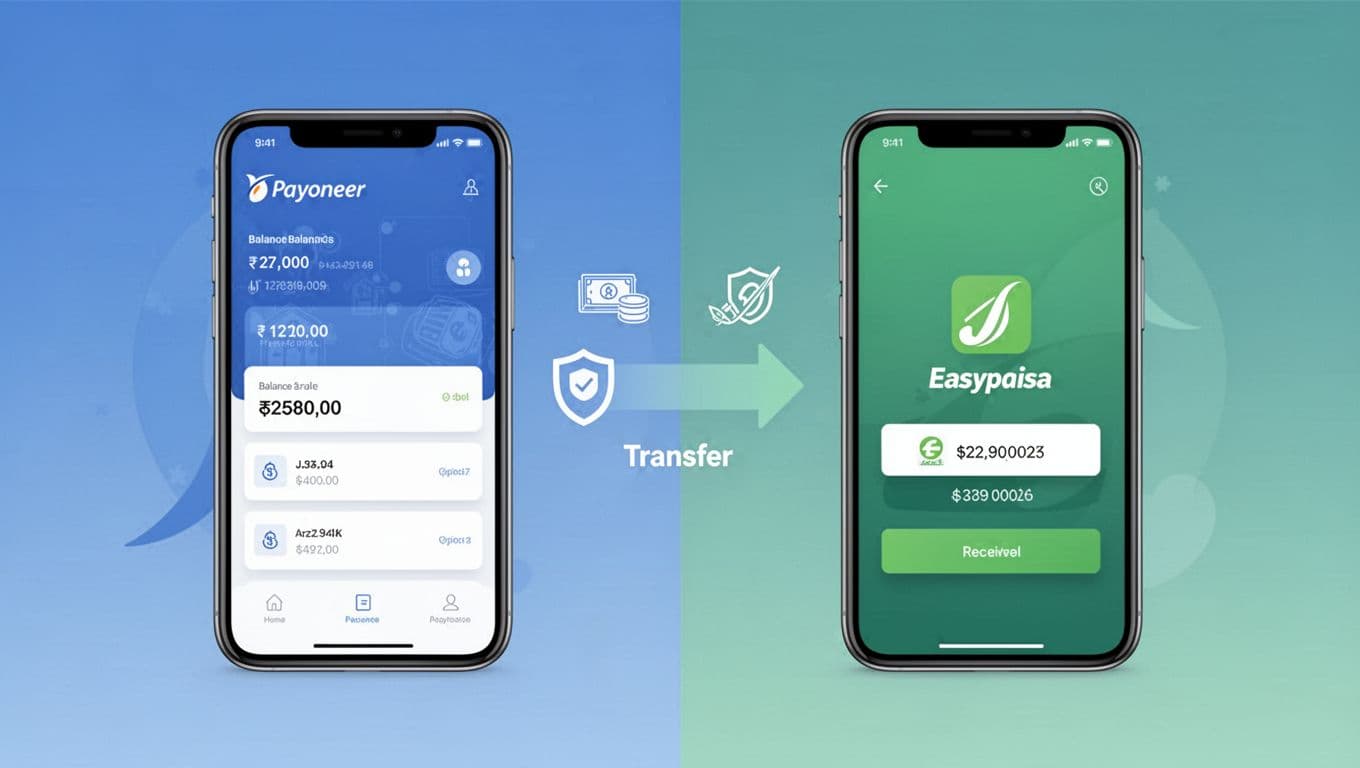 Two common routes for receiving Payoneer funds into mobile wallets, created with AI.
Here’s the quick comparison most people need before choosing a route.
| Route (2026) | Processing time | What you pay most often | Limits (typical) | Best for |
|---|---|---|---|---|
| Payoneer to JazzCash (official) | Usually instant | Payoneer withdrawal fee shown at checkout (often around 2%) plus FX spread | Shown inside JazzCash, depends on verification (many users see daily and monthly caps) | Fast cash, bill payments, local transfers |
| Payoneer to bank, then Easypaisa | 2 to 5 business days to bank, then often instant to wallet | Payoneer bank withdrawal fee and FX rate, bank transfer fees vary | Bank and Easypaisa limits vary by verification level | People who must receive in Easypaisa |
| Third-party exchanger to Easypaisa | Minutes to hours | Rate spread plus service fee, varies by provider | Provider-dependent | Emergency only, with caution |
To reduce total cost, focus on what you control. Withdraw larger amounts less often (while staying under limits). Watch the FX rate right before you confirm, because that can swing your PKR result more than a small fee. For bank withdrawals, avoid starting on weekends if you need the money fast.
Best choice by situation is simple: if you need instant wallet funds, pick JazzCash. If you need Easypaisa for a specific use, use the bank bridge. If it’s an emergency and you understand the risk, an exchanger might work, but treat it like a high-risk trade.
Conclusion
In 2026, the clearest path is still the same: Payoneer to JazzCash is the official, usually instant option, while Easypaisa needs a bank transfer bridge, or a third-party exchanger with real risk. Before you confirm any withdrawal, pause on the final screen and check the fee line and the PKR exchange rate. That’s where most “hidden cost” lives.
Start with a small test transfer, especially after changing your phone, SIM, or app version. Save these steps, and if a transfer fails, check your wallet limits and verification status first. A clean profile match fixes more problems than people expect.