

You walk into a mobile market in Karachi, Lahore, or Rawalpindi with one goal: get an iPhone on a tight budget. Then you see it, a “JV iPhone” for way less than the normal price. It looks clean, Face ID works, battery health seems okay, and the seller says, “Sir, bas Wi-Fi pe chala lo.”
Here’s the simple truth: a JV iPhone is usually a carrier-locked iPhone imported from abroad, often tied to one foreign network contract. In Pakistan, that extra lock creates extra problems, especially in 2026 when PTA enforcement and SIM-based services matter more than ever.
This guide breaks down the real disadvantages of JV iPhones in Pakistan 2026, so you don’t learn the hard way through blocked SIMs, unlock scams, and low resale value.
The biggest problem in 2026: SIM and PTA issues that can block your phone
In Pakistan, the phone you buy isn’t judged only by condition. It’s judged by whether it can work with a local SIM, legally and reliably. This is where JV iPhones fall apart.
Most JV iPhones bring two locks together:
- Carrier lock (the phone is tied to a foreign network)
- PTA network restriction (Pakistan blocks unregistered devices from local cellular networks)
If either one hits you, your “cheap iPhone” turns into a Wi-Fi device. People say “Wi-Fi only” like it’s no big deal, but daily life says otherwise. Without a working SIM, you can’t depend on your phone outside home or office Wi-Fi.
Even worse, PTA problems don’t always show up on day one. A phone can look fine in the shop, then lose local SIM service later. That delayed pain is why many buyers feel tricked, even if the seller didn’t lie directly.
Here’s what “Wi-Fi only” often means in real life:
- No normal calls when you’re outside
- No SMS, including many verification messages
- No mobile data, so maps and ride apps fail on the road
- Banking and wallets can become stressful if your OTP depends on that SIM
If you need your iPhone to act like a phone, a JV model is a risky bet in Pakistan.
Carrier lock basics: why your JV iPhone may accept only one network (or no local SIM at all)
A carrier lock is not “locked to Jazz” or “locked to Zong.” It’s usually locked to a foreign carrier, like a US, UK, or Gulf network.
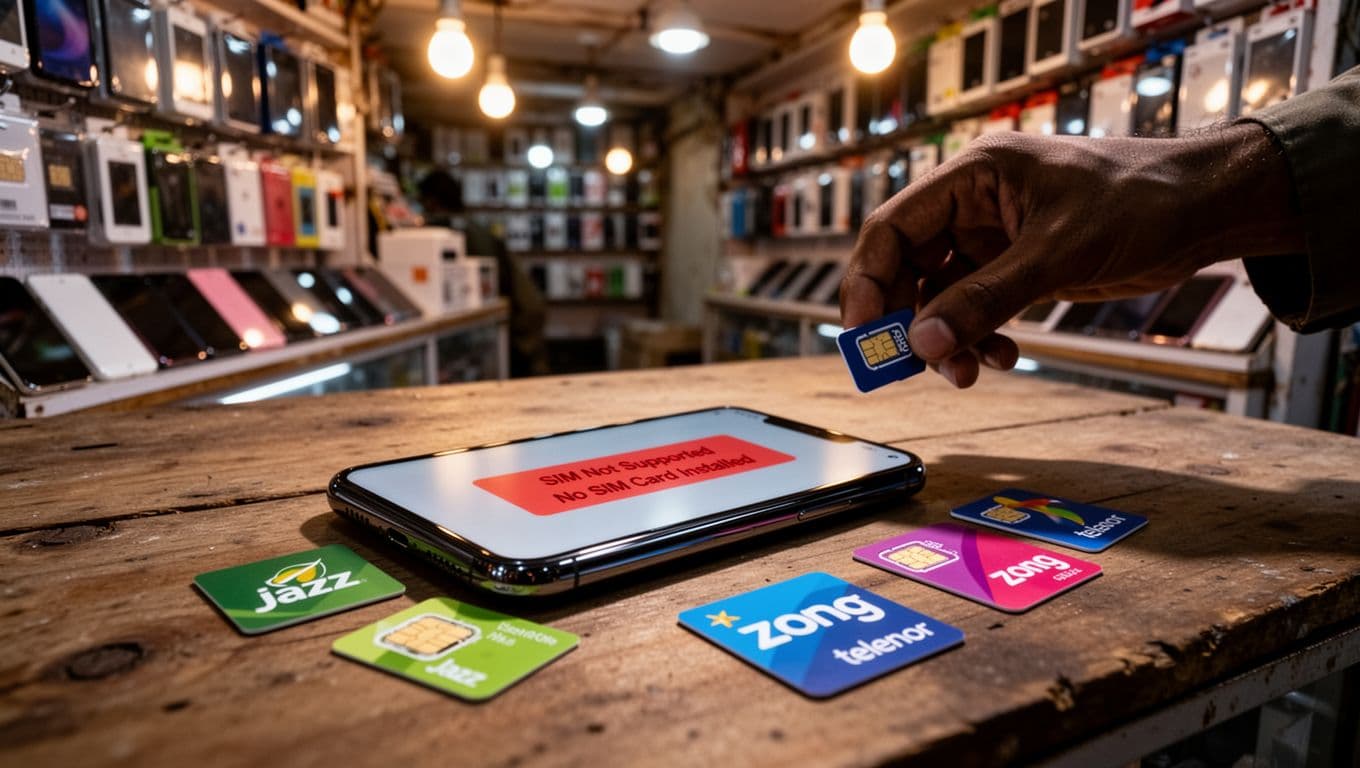
So you insert a Jazz, Zong, Ufone, or Telenor SIM, and the iPhone may show messages like “SIM not supported” or fail to activate properly. Sometimes it detects the SIM but won’t register on the network.
That’s why shop tests can be misleading. A seller might show you the iPhone booting up, running apps, and even using Wi-Fi. Yet the core function, local SIM use, is blocked by design.
PTA reality check in Pakistan: why JV models usually stay non-PTA and get blocked
PTA registration is what allows a phone to use Pakistani cellular networks long term. If a phone stays non-PTA, it may work for a short grace period, then lose SIM service.
Now add JV into the mix. Even if someone tells you, “Just pay PTA tax,” the carrier lock can still keep you stuck. In other words, you can spend serious money and still end up with a phone that doesn’t take local SIMs.
To make the trade-offs clearer, here’s a quick comparison many buyers wish they saw before purchase:
| Type of iPhone in Pakistan | Local SIM stability | PTA registration outcome | Typical buyer risk |
|---|---|---|---|
| JV (carrier-locked) | Often fails or becomes Wi-Fi only | Usually not worth paying because lock remains | High |
| Factory-unlocked (non-PTA) | Works until PTA restriction hits | Can become fully usable after registration | Medium |
| PTA-approved, factory-unlocked | Works normally | Already compliant | Low |
The takeaway: JV iPhones combine the two most painful restrictions a Pakistan user can face, carrier lock plus PTA risk.
Hidden costs and common scams: the cheap price often isn’t the final price
JV iPhones sell fast because the first number you hear sounds amazing. For a student or a first-job salary, that discount feels like finding a branded jacket in a Sunday bazaar. It looks original, but you don’t yet know what’s wrong with the zip.
The big disadvantage is that JV prices often hide future spending. Many buyers end up paying in pieces:
- An “unlock fee” today
- Another fee after an iOS update breaks the patch
- Extra money for a second phone to use as a hotspot
- Time and transport costs for repeated shop visits
Besides cost, scams are common because the JV market runs on confusion. Some sellers mix terms like “JV,” “non-PTA,” “patched,” and “factory unlocked” as if they’re all the same. They’re not.
For a deeper look at how JV iPhones are sold in local markets, including pricing behavior and buyer traps, see https://proinfodesk.com/exploring-jv-iphones-prices-risks-and-rewards-in-pakistan/.
Unlocking risks in Pakistan: patch methods, relock after updates, and iCloud or carrier surprises
Some shops offer “software unlock” or “patched unlock.” Sometimes it works for a while. The problem is reliability.
A patch can fail after:
- iOS updates
- Factory reset
- Changing SIMs
- Network changes on the carrier side
That creates a constant fear: “Should I update my iPhone or not?” Living with that stress defeats the purpose of buying an iPhone in the first place.
Watch for red flags that usually mean trouble:
- “Factory unlocked by software” (factory unlock doesn’t work like that)
- “Guaranteed PTA approved JV” (often unrealistic in practice)
- “No return after update” (they already expect it to relock)
Also, never ignore iCloud status. A phone can be carrier-locked and also have iCloud problems later if the seller isn’t honest. If iCloud isn’t fully signed out, you can lose access after reset.
Quick checklist before you buy a JV iPhone (so you don’t get stuck)
Use this quick shop test before paying, even if you feel rushed:
- Test with two local SIMs (for example, Jazz and Zong), not just one.
- Make a real call, then check if it connects quickly.
- Send an SMS and confirm it arrives.
- Turn mobile data on and load a simple webpage without Wi-Fi.
- Check Settings for SIM restrictions if the iOS version shows it (many iPhones show a “No SIM restrictions” style status on some versions).
- Confirm iCloud is signed out, then restart the phone once.
- Test Face ID or Touch ID and confirm True Tone and speakers work.
- Get a clear return policy in writing, especially if the seller promises an unlock.
That last point saves people. Verbal promises disappear after you leave the market.
Day-to-day disadvantages: what feels annoying after the first week
The first week with a JV iPhone can feel fine, especially if you spend most time on Wi-Fi. Then real life starts pulling you outside.
Students miss updates from classmates because there’s no mobile data on the bus. Office workers can’t receive that “I’m outside” call from a client. Riders struggle with maps when the signal drops. Even simple tasks like food delivery become harder because your number isn’t reachable.
Some people try the “two-phone life.” They keep a cheap PTA-approved Android for hotspot and SIM, then carry the JV iPhone for apps and photos. It works, but it’s annoying. It also adds cost, extra charging, and extra chances to lose a phone.
Another daily issue is confidence. With a normal iPhone, you update iOS when Apple releases it. With many JV phones, users delay updates because they fear relock or activation issues. That means you may miss security fixes and new features, which defeats the long-term value of iOS.
No SIM means real limitations: OTPs, banking alerts, WhatsApp number issues, and emergency calls
In Pakistan, many services still trust SMS. Banks, wallets, and even some government or school portals use OTPs and alerts tied to your SIM.
Without reliable SIM service:
- OTPs can fail when you need them most.
- Banking alerts might not arrive on time.
- WhatsApp works on Wi-Fi, but number verification becomes harder after reinstall.
- Ride-hailing and delivery apps can break if your number isn’t reachable.
So even if you “don’t call much,” the phone still needs cellular service to feel complete.
Repairs and parts: why support is harder when the phone has a “story”
A JV iPhone often arrives with an unclear history. It may be imported, resold, or tied to a contract abroad. As a result, local repair shops can hesitate, especially if the phone has unusual activation behavior.
Also, Apple warranty support isn’t straightforward locally, and many buyers rely on market repair shops anyway. With JV phones, you should expect paid repairs and fewer guarantees.
In short, you might save money upfront, then pay more when something goes wrong.
Resale value and long-term regret (Disadvantages of JV iPhones in Pakistan 2026)
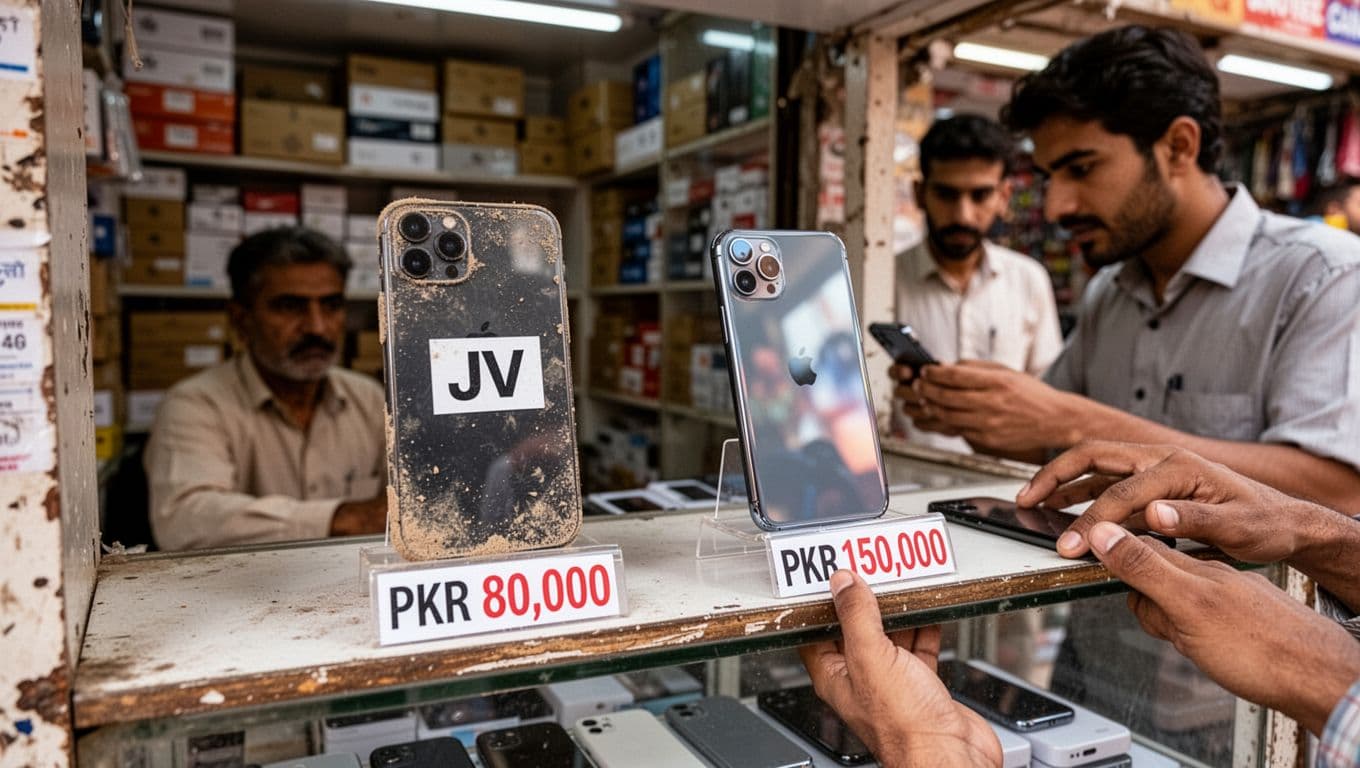
Resale is where many JV buyers feel the biggest regret. In 2026, most buyers in Pakistan ask two questions first: “PTA approved?” and “Factory unlocked?” If your answer is “JV,” the mood changes.
Even when the phone looks perfect, the label creates doubt:
- Buyers assume SIM problems.
- They fear PTA blocking.
- They expect hidden issues after updates.
- They bargain hard because they know demand is low.
As a result, exchange offers and buyback prices drop sharply. You might save today, then lose more at resale time.
If you want a broader perspective on common JV problems in local buying and selling, this post covers related points: https://proinfodesk.com/7-disadvantages-of-jv-iphones-in-pakistan/.
Why most buyers avoid JV in 2026 (even if the phone looks perfect)
The limitation isn’t cosmetic, it’s built into the phone’s network status. A clean body, a bright display, and a strong battery can’t fix carrier lock and PTA risk.
JV models may suit a narrow group, like someone who needs an iPhone only for Wi-Fi at home. On the other hand, anyone who needs calls, OTPs, or mobile data should avoid it.
FAQ: JV iPhones in Pakistan (2026)
Are JV iPhones original Apple iPhones?
Yes, many are original iPhones. The problem is not “fake,” it’s network lock and status. The phone can still be a bad deal.
Can a JV iPhone work on Jazz, Zong, Ufone, or Telenor?
Sometimes it won’t work at all. Other times, a patch makes it work briefly. Still, there’s no guarantee it will stay stable after updates or resets.
Can I pay PTA tax on a JV iPhone and use it normally?
PTA payment covers legal network access, but a carrier lock can still block local SIM use. So paying PTA doesn’t always solve the JV problem.
How can I check if an iPhone is carrier-locked before buying?
Test multiple Pakistani SIMs, make a call, and check mobile data. Also check the phone’s network status in Settings if it’s visible on that iOS version.
What should I do if I already bought a JV iPhone?
First, stop assuming it will “fix itself.” Use it on Wi-Fi if that meets your needs, or sell it honestly as JV. If a shop offers an unlock, get written terms and a return window.
Conclusion
The disadvantages of JV iPhones in Pakistan 2026 come down to one thing: unstable real-world usability. Carrier lock can reject local SIMs, and PTA restrictions can turn the phone into Wi-Fi only. Then come the hidden costs, the unlock promises that don’t last, and the painful resale value.
Here’s a simple rule: if you need a SIM for calls, OTPs, and mobile data, avoid JV and choose a factory-unlocked, PTA-approved option. If you truly need only Wi-Fi, a JV phone can make sense at the right price.
Before paying, always test with a local SIM and get a clear return policy in writing.