
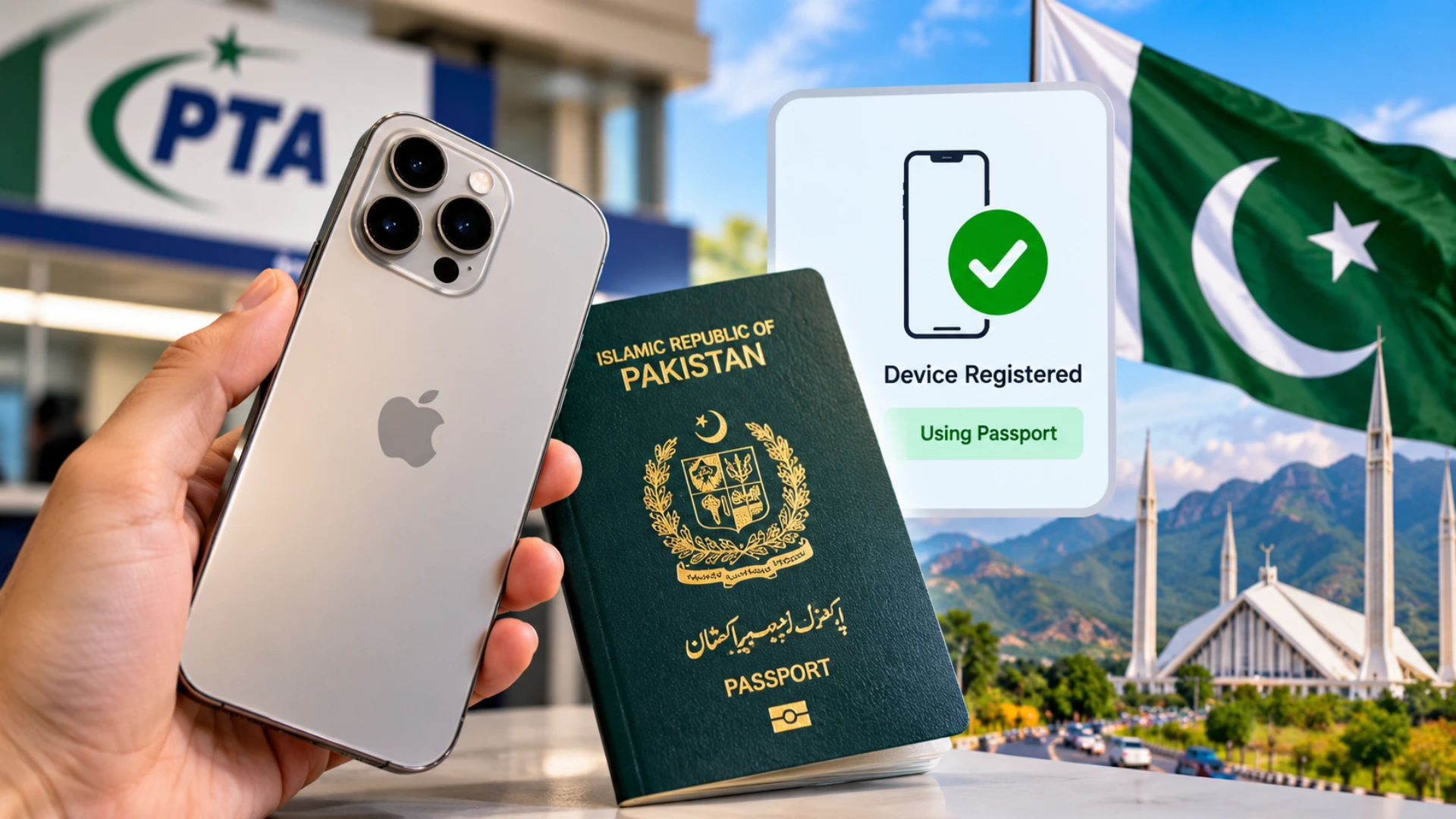
Register iPhone in Pakistan Without CNIC: Passport Rules
Can an overseas Pakistani get a foreign iPhone working in Pakistan without a CNIC? If you’re searching for “Register iPhone in Pakistan Without CNIC,” the important distinction is temporary use versus permanent, tax-paid registration.
PTA’s passport-based visitor facility covers short stays, but its listed fields still include CNIC/NICOP details for overseas Pakistanis. A passport alone doesn’t replace those requirements.
Start with your eligibility, then check FIA arrival verification, SIM ownership, and the 120-day limit before applying through DIRBS. These checks determine whether you can use the temporary facility and how long your handset can access Pakistani mobile networks.
Register iPhone in Pakistan Without CNIC: Who Is Eligible?
PTA’s official temporary registration FAQ covers overseas Pakistanis and foreign nationals visiting Pakistan temporarily. It doesn’t offer automatic eligibility to every Pakistani who lacks a CNIC.
The passport route is a temporary visitor facility, not a blanket CNIC waiver
Both groups can apply, but their identity requirements differ. PTA lists a CNIC/NICOP number for overseas Pakistanis and marks that field as not applicable to foreigners.
Your passport also supports arrival verification. FIA checks the arrival date against its records, while your Pakistani mobile operator verifies that the submitted SIM belongs to you.
The FAQ doesn’t state a minimum waiting period after arrival or a separate travel-history lookback rule. It also doesn’t list a visa among the required application details. However, that doesn’t remove any immigration requirements for entering Pakistan.
Passport vs CNIC: Key differences in eligibility, timing, and documents
The two routes address different needs.
| Route | Who can use it | Timing | Required details |
|---|---|---|---|
| Passport-based temporary facility | Eligible overseas Pakistanis and foreign visitors | Up to 120 days from arrival | Passport number, arrival and intended departure dates, own-name Pakistani mobile number/SIM, IMEI(s), email, and CNIC/NICOP for overseas Pakistanis; that identity field doesn’t apply to foreigners |
| Standard CNIC/NICOP-based registration | Pakistani applicants using CNIC/NICOP details | Permanent use requires formal DIRBS registration and applicable duties or taxes | CNIC/NICOP and device details, plus information required by the current DIRBS application |
Applicant status matters more than the document’s name. An overseas Pakistani without a CNIC card may have a NICOP number. A Pakistani applicant without either number should confirm eligibility with PTA before applying.
How to Register Through DIRBS Using Your Passport
Choose the temporary visitor facility deliberately. An ordinary paid registration application isn’t the same process, even though both involve DIRBS.
Gather your passport, travel details, SIM, and IMEI before you apply
Have your passport number, arrival date, intended departure date, email address, and Pakistani mobile number ready. Overseas Pakistani applicants should also prepare their CNIC/NICOP number.
The SIM must be issued in your own name. Borrowing a relative’s number doesn’t satisfy the ownership requirement, even if you use that SIM throughout your visit.
On your iPhone, dial *#06# to display its IMEI information. You can also check Settings > General > About. Compare the digits carefully and prepare the IMEI(s) shown for that handset.
If your phone displays multiple IMEIs, don’t mistake them for separate phones. The allowance covers one handset, and accurate device identifiers help avoid registration mistakes.
Submit the application and pass FIA and SIM checks
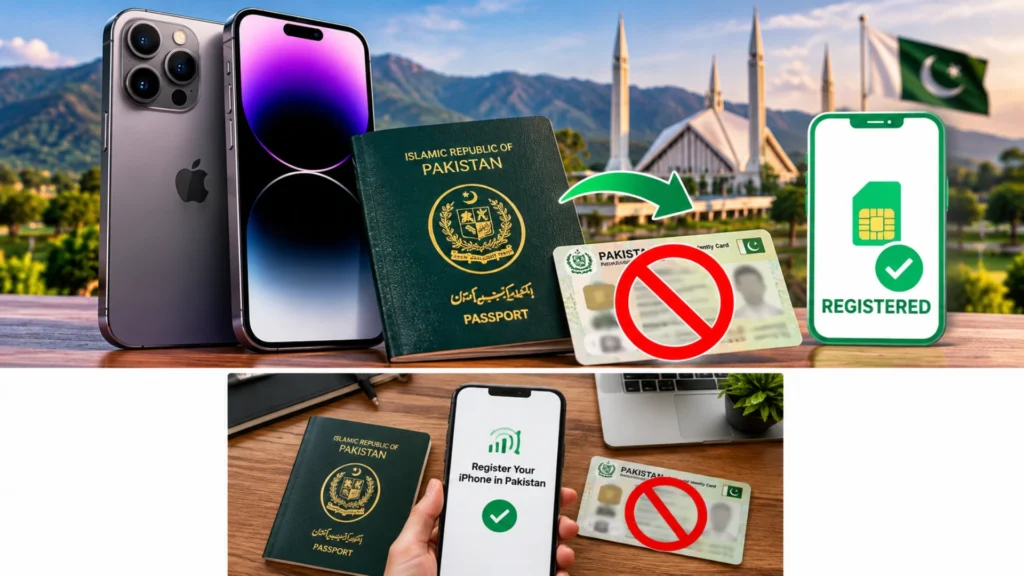
Use PTA’s DIRBS temporary registration system and follow the current FAQ’s live portal instructions. Enter the requested identity, travel, mobile-number, and device details, then review them before submitting.
FIA’s Integrated Border Management System (IBMS) validates the arrival date in real time. Passport validation through FIA is mandatory, so a travel-record mismatch can stop processing.
Meanwhile, the mobile operator checks SIM ownership. A number registered to someone else may prevent approval, even when the passport and IMEI information are correct.
Submit only after the details match your documents and operator records. Keep the application’s reference or confirmation details, then check its status through the system. Don’t assume submission means approval or expect an instant decision.
Check Your Status and Resolve Record Mismatches
If the application doesn’t progress, check the information you entered before submitting another request. A mistyped passport number, incorrect arrival date, or mismatched mobile number can undermine the required checks.
Compare the travel details with your entry documents. Then ask your mobile operator to confirm whose identity is attached to the SIM. This is especially useful if someone else originally obtained the number for you.
For an unresolved arrival-validation problem, contact PTA for guidance on the rejected or pending application. Keep your passport, travel details, IMEI(s), and application reference available so you can describe the issue accurately.
Don’t substitute another person’s passport, arrival record, or SIM ownership details to get past a failed check. The facility links the applicant, visit, handset, and submitted mobile number.
Finally, check the recorded approval period. That date matters because the temporary allowance is tied to arrival, rather than a fresh period starting whenever you submit.
What the 120-Day Temporary Use Exemption Covers
Eligible visitors can temporarily register one personal handset at no registration cost, for up to 120 days from arrival. FIA validates that arrival date.
PTA also describes applying after 30 days of arrival and receiving temporary registration for the next 90 days. That wording doesn’t establish a separate 30-day submission cutoff. Read it alongside the stated overall limit of 120 days from arrival.
If you’re applying later in your stay, confirm the remaining eligible period with PTA. Don’t assume that applying late restarts the full allowance or that an application date replaces the verified arrival date.
Under FBR’s temporary registration guidance, the registered IMEI(s) are suspended from local network services when the 120-day period lapses. This is a temporary-use facility, not permanent registration or an indefinite tax exemption.
PTA also pairs the approved IMEI(s) with the submitted SIM number(s). Another SIM won’t receive mobile service under that temporary approval. Changing the SIM can therefore interrupt service even while the approved visit period remains open.
Temporary approval is tied to the submitted SIM number(s), so an approved iPhone won’t necessarily work with another Pakistani SIM.
The rules apply to mobile handsets generally. An iPhone doesn’t receive a separate allowance because of its brand, purchase country, or price. On a later visit, you’ll need to apply again.
What to Do If You Stay Longer, Return Abroad, or Need Permanent Use
Your plans can change after registration. Leaving Pakistan, extending your stay, and keeping the iPhone for ongoing local use each require you to consider the limits of the original approval.
If you leave Pakistan or return later
Leaving Pakistan doesn’t turn temporary registration into permanent registration. The facility remains attached to that visit and its arrival-based period.
Don’t treat an early departure as a promise that unused days will carry into your next trip. The official guidance requires a fresh application on a later visit, with new travel and SIM validation.
Before returning, keep your handset’s IMEI details accessible and check your Pakistani number’s ownership information. Those details will matter again when you apply.
If you’re leaving the phone in Pakistan for someone else, remember the SIM-pairing restriction. The temporary approval doesn’t give another person unrestricted local-network access on that device.
If you need permanent Pakistani network access
For a longer stay or ongoing use, the next route is formal DIRBS registration with applicable FBR duties and taxes. The temporary facility doesn’t remove those obligations once you need permanent access.
Check the current registration requirements before the temporary period ends. Tax amounts aren’t the focus here, and you shouldn’t assume a previous assessment remains current for your device.
The cited official guidance doesn’t explain a direct conversion of expired temporary registration into CNIC/NICOP-based permanent registration. Ask PTA whether you can proceed under your identity details and what application process applies.
Don’t assume an expired passport-based approval can simply be converted by changing one field. Confirm the process first, particularly if the same IMEI already appears in a temporary application. Follow any instructions PTA gives for your device and applicant record.
Frequently Asked Questions
Can I register without a CNIC?
For an overseas Pakistani, PTA’s temporary registration fields include CNIC/NICOP, so lacking a physical CNIC doesn’t necessarily mean lacking an eligible identity number. Foreign nationals don’t need that field. If you’re Pakistani and have neither number, confirm eligibility with PTA before relying on the passport route.
Is a passport alone enough?
No, the application also requires travel details, an email address, an own-name Pakistani mobile number, and the device IMEI(s). Pakistani applicants must also address the listed CNIC/NICOP requirement. The passport supports identity and FIA arrival validation, but it doesn’t replace every other required detail or guarantee approval.
What happens if I miss the deadline?
The confirmed temporary-use limit is 120 days from arrival, after which local-network access for the registered IMEI(s) is suspended. Don’t confuse that limit with an unverified separate application deadline. For continued use, check the current DIRBS requirements for formal registration and applicable FBR duties and taxes.
Can I use the temporary facility again on my next visit?
Yes, FBR’s guidance says visitors must reapply on a later visit rather than rely on the earlier approval. The facility still covers one handset and requires fresh travel and SIM validation. Keep your device identifiers available, but don’t assume that a previous approval automatically authorizes service during the new trip.
Match the Registration Route to Your Visit
Passport-based temporary use and permanent DIRBS registration have different requirements. The temporary facility also doesn’t automatically waive CNIC/NICOP details for Pakistani applicants.
If you’re an overseas Pakistani with a recent, FIA-verifiable arrival and meet the identity and SIM checks, the temporary passport route may be the better option for a short visit. Its arrival-based limit still applies.
Before applying, confirm any unresolved eligibility, timing, or permanent-registration question in PTA’s current official guidance. That check helps you avoid relying on a passport alone or expecting temporary approval to provide permanent local-network access.