
An overseas job offer can stall when your employer asks for a police character certificate and you’re unsure where to apply. Many overseas employers ask Pakistani applicants for this document, also called a police clearance certificate, as part of their background checks.
The process differs by province and territory, so confirm your local requirements before submitting anything. This guide covers the documents, application routes, published fees, and processing times you need to plan ahead.
Start by checking what your employer expects, then match those requirements to the correct police authority.
Key Takeaways
- Confirm the certificate type, residence period, acceptable issue date, translation requirements, and any attestation with your employer or receiving authority.
- Prepare identity documents, passport copies, and any photographs, affidavits, or residence evidence listed by your issuing authority.
- Punjab’s published PKM fee is Rs 500; Islamabad Police lists Rs 1,000. These aren’t nationwide charges.
- Some authorities permit applications through relatives abroad, but authority letters and supporting documents differ by jurisdiction.
- Apply early, keep your receipt, and check the completed certificate before arranging translation or attestation.
What a Police Character Certificate Proves for an Overseas Job
A police character certificate reports the outcome of police record checks for the place or period covered by the issuing authority. An overseas employer may request it before confirming employment, while a destination country’s authorities may require it for immigration processing.
However, receiving a certificate doesn’t automatically satisfy every background-check requirement. The employer or receiving authority decides which document it accepts and how recent it must be.
Before applying, ask for written instructions covering the certificate’s name, required residence dates, acceptable issue date, and language. Also confirm whether you need a certified translation, Ministry of Foreign Affairs attestation, embassy legalization, or another authentication step.
Keep those instructions with your application papers. If the employer requests additional coverage later, you’ll have a clear record of what it originally asked for.
Character certificates also appear in some domestic recruitment checklists, including the checklist for FIA Sub-Inspector jobs in Peshawar. However, a domestic recruitment requirement doesn’t establish what an overseas employer will accept.
Your safest starting point is the receiving authority’s checklist, followed by the issuing police authority’s procedure.
How to Get a Police Character Certificate in Pakistan
If you’re currently in Pakistan, identify the authority responsible for the residence details your certificate must cover. Then prepare its documents and follow its application process.
Gather Your Original CNIC or B-Form and Passport
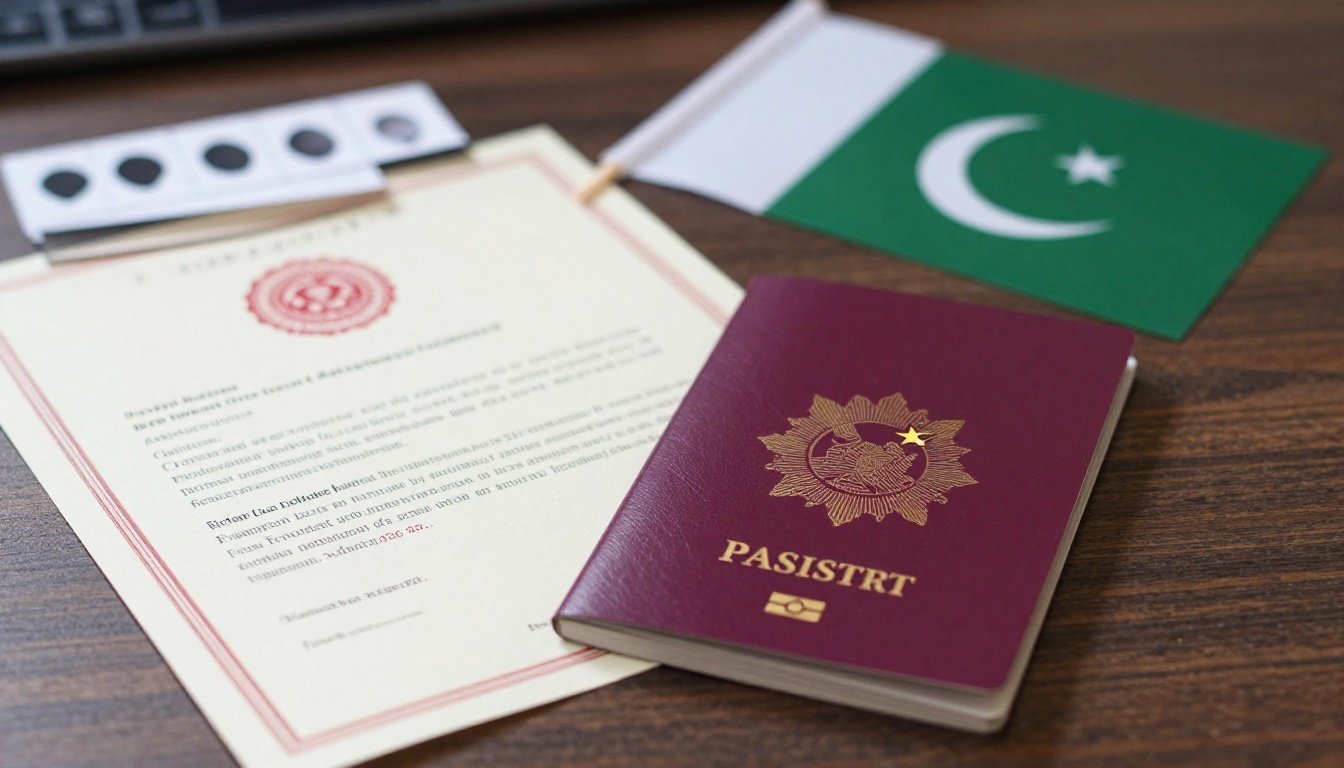
Punjab’s published checklist includes an original CNIC or B-Form with a copy, an original passport with a copy, and an affidavit. Other authorities may request photographs, additional identity copies, or residence evidence.
The exact required documents vary by authority. Don’t assume a photograph count or affidavit format applies everywhere.
Islamabad Police lists residence proof when your CNIC doesn’t show an Islamabad address. Its examples include a rent agreement, allotment letter, or hostel letter.
Check whether your authority needs a prescribed affidavit before purchasing stamp paper or arranging signatures. Keep originals and copies together for your visit.
Apply Through the Police Office or Service Center for Your Area
Punjab uses Police Khidmat Markaz (PKM), and Islamabad Police also directs applicants to a Police Khidmat Markaz. These routes don’t establish one nationwide application channel.
Use this sequence after confirming the correct office:
- Obtain the current form and document checklist from the issuing authority.
- Enter your identity, passport, and residence details accurately.
- Submit the documents and provide biometrics if requested.
- Pay the published fee through the instructed payment method.
- Keep the receipt or reference number for follow-up.
Before leaving, ask how you’ll receive the certificate and when to contact the office if it hasn’t arrived. A submission receipt is useful evidence of your application, but it doesn’t replace the completed certificate.
Check Province-Specific Rules and Options for Applicants Abroad
Your location and residence history determine which instructions matter. Applicants abroad should check the representative route before asking a relative to visit an office.
Punjab and Islamabad Publish Representative Procedures
Punjab’s PKM service guidance says applicants can apply at any PKM center in Punjab for a certificate concerning a Punjab district. It also lists courier delivery and authority documentation for applicants abroad.
Islamabad Police publishes an overseas-applicant checklist that includes an authority letter, photograph, and affidavit stating the duration abroad. It also lists the passport page showing the last exit and evidence of Islamabad residence.
These are separate procedures. Don’t substitute Punjab’s authority letter requirements for Islamabad’s checklist, or assume either authority accepts an informal message authorizing a relative.
If consular attestation is required, confirm the wording and supporting documents before signing the authorization.
KP, Balochistan, and Sindh Need Their Own Checks
KP Police describes local police verification and a blood-relative route for applicants abroad. Its guidance includes an affidavit, identity documents, and the applicant’s last-exit date. Multiple relevant addresses require verification through the corresponding police stations.
Balochistan Home Department describes verification involving biometrics and Special Branch clearance. Confirm the submission route and supporting documents with the department or relevant police authority.
For Sindh, confirm the current procedure directly with the relevant police authority. A complete province-wide application procedure isn’t established by the official guidance available here.
For other territories, check the responsible local authority rather than applying Punjab’s rules by default.
Police Character Certificate Fee and Turnaround Time in 2026
Use published figures as jurisdiction-specific planning examples, then check the current charge before applying. Punjab’s PKM service page lists Rs 500, so older fee figures shouldn’t guide your payment.
These official examples cover different services and jurisdictions:
| Authority | Published fee | Published timeframe |
|---|---|---|
| Punjab PKM | Rs 500 | Three working days after the application date |
| Islamabad Police | Rs 1,000 | Three working days |
| Balochistan Home Department | Confirm locally | Verification normally takes three to five business days after biometrics and Special Branch clearance |
Punjab’s fee appears on its PKM service checklist, while Islamabad Police’s certificate instructions publish its charge and timeline.
The Balochistan figure describes verification, not a guaranteed end-to-end certificate delivery period. Similarly, working days don’t mean calendar days, and courier delivery may affect when you receive the document.
A published processing time covers the authority’s stated service. Translation, attestation, and delivery can require separate time.
Also budget for any copies, photographs, postage, or authentication your application requires. Ask whether these are separate charges rather than assuming the police fee covers everything.
An agent’s quoted package price isn’t evidence of the official fee.
Avoid Delays, Rejections, and Extra Trips
A missing document can mean another visit. Before submission, compare your application against the issuing authority’s current checklist rather than a forwarded screenshot or an older application.
Check Identity Details and Residence History
Match your name, CNIC number, date of birth, and passport details across the form and supporting documents. If records differ, ask the office how to resolve the mismatch before submission.
Provide accurate residence dates and addresses. Don’t omit an address simply because it doesn’t appear on your current CNIC.
For a representative application, check the authority letter, required attestation, and the relative’s identity documents. Also bring the originals and copies requested by the authority.
Keep a copy of your submitted application and receipt. If processing exceeds the stated timeline, use the reference number when contacting the issuing office.
Inspect the Certificate Before Sending It Overseas
When you receive the certificate, check its spelling, identity details, residence coverage, and issue date. Report errors to the issuer before paying for translation or legalization.
Next, follow the receiving authority’s authentication instructions. Don’t assume every destination requires the same attestation chain.
Educational checks remain separate. If your employer also requests verified qualifications, the HEC degree verification process covers a different document requirement and doesn’t replace police clearance.
Finally, keep a readable scan and a secure copy of the original certificate. Retain your receipt until the employer or receiving authority accepts the document.
Frequently Asked Questions
Is a Police Character Certificate the Same as a Police Clearance Certificate?
The names often describe documents requested for similar purposes. However, the employer or destination authority may require a particular title, format, or scope, so use its exact instructions when applying.
Can a Family Member Apply for My Certificate While I Am Abroad?
Some authorities allow a blood relative to apply with authorization and supporting documents. Punjab and Islamabad publish representative procedures, but you must follow your issuing authority’s current checklist and any attestation requirements.
How Long Is a Police Character Certificate Valid?
There’s no single validity period for every overseas job or destination. Ask the receiving authority how recent it must be and whether that requirement applies at submission, visa processing, or another stage.
Do I Need the Certificate From Every Province Where I Have Lived?
That depends on the receiving authority’s residence-history requirements and local police rules. Confirm which addresses and dates need coverage before deciding whether you need certificates or verification involving more than one jurisdiction.
What Should I Do If My Certificate Is Delayed or My Application Is Rejected?
Contact the issuing office with your receipt or reference number and ask for the specific reason. Correct any missing or mismatched documents, then follow that office’s instructions; there’s no universal appeal procedure.
Can I Reuse a Certificate Prepared for a Local Job Application?
Acceptance depends on its date, format, and residence coverage. Even if a checklist such as FIA Constable recruitment requirements mentions character clearance, your overseas employer must confirm whether that certificate meets its requirements.
Prepare the Right Certificate Before Your Deadline
Getting a police character certificate starts with matching the requirements: what your employer needs and what your local authority issues. Prepare the required documents, follow the correct provincial process, and verify the fee and turnaround time before applying.
Apply early enough to allow for corrections or additional authentication. Keep copies of the certificate and receipt so you can follow up without rebuilding your paperwork at the last minute.