
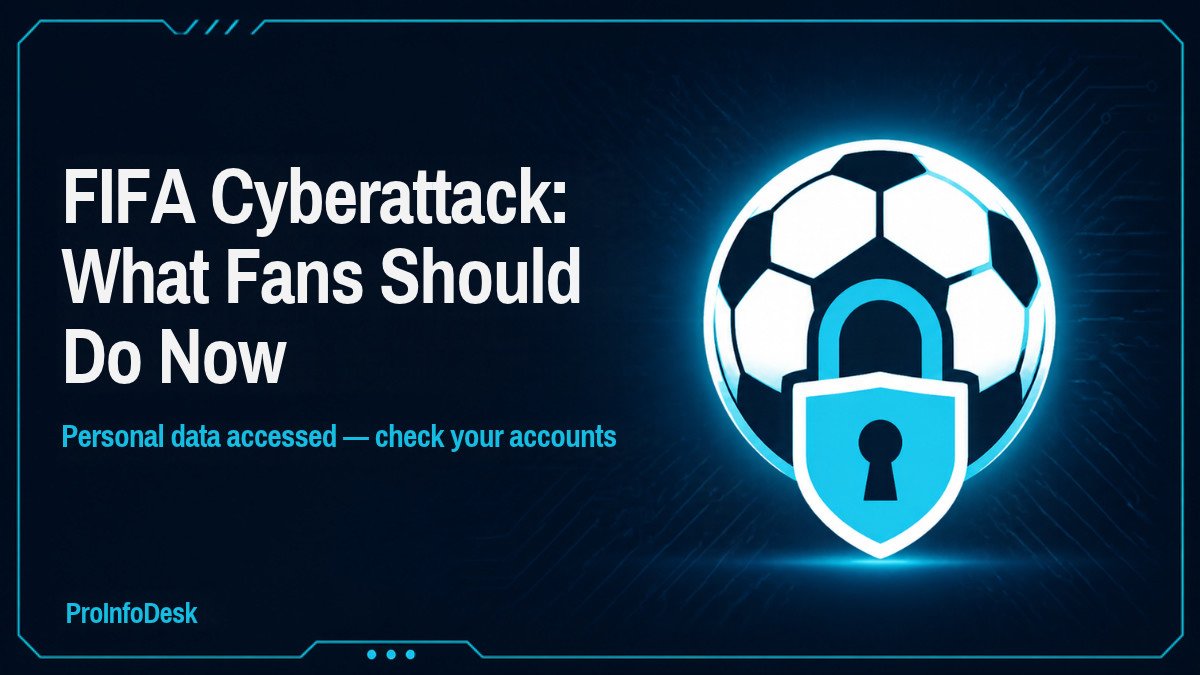
FIFA, football’s world governing body, has confirmed it was hit by a cyberattack in which hackers accessed what it calls a “limited set of personal and business information.” The organisation shared the news in a statement to The Associated Press on Thursday, 26 November 2026, and said it is working with the relevant authorities, including law enforcement.
If you have ever bought tickets, registered for a FIFA account, played in a FIFA-run esports event or otherwise shared your details with FIFA, here is what we know so far and the simple steps worth taking today.
What FIFA has confirmed
- There was a cyberattack. FIFA says hackers gained access to a “limited set of personal and business information.”
- Authorities are involved. FIFA says it is working closely with the relevant authorities, including law enforcement.
- Some data has been published. FIFA condemned “the unlawful acquisition and publication of information, particularly personal data,” which indicates at least some stolen material has been put online.
FIFA has not said when the attack happened, how attackers got in, how many people are affected, or exactly what types of personal data were involved. Until it does, nobody outside FIFA can say for sure whether your details are part of it.
Who is claiming responsibility
According to AP reporting carried by SecurityWeek and ESPN, a group calling itself the “Handsome Boy Hacking Club” posted a screenshot on X of what it claimed were FIFA files. A few days later it appeared to take credit for the hack in reply to a post saying more than 12 GB of internal documents had leaked.
Treat that 12 GB figure as a claim, not a confirmed number. FIFA has not verified the size or contents of the leak.
Am I affected?
Right now, there is no official lookup tool and FIFA has not said it is notifying individuals. The people most likely to care are those who have:
- bought match or World Cup tickets through FIFA’s ticketing site
- created a FIFA account (for example FIFA+ or fan ID-style registrations)
- worked with FIFA as a supplier, partner, volunteer or member-association contact
If FIFA confirms that your data was involved, the notice should come by email or post from FIFA itself. Do not trust any message that asks you to “verify” your account through a link.
What to do now (10-minute checklist)
- Change your FIFA account password by going directly to the official site, not through a link in an email. Use a long, unique password.
- Stop reusing that password. If you used the same password on email, Instagram or shopping sites, change it there first. Reused passwords are what turn one breach into five.
- Turn on two-step verification on your email account. Your inbox is the key to every password reset. Our guide on how to secure your Gmail account walks through it, and passkeys are even better where they are offered.
- Watch for ticket and refund scams. Attackers often use leaked names and email addresses to send convincing messages about “ticket transfers”, “refunds” or “account suspension”. FIFA will not ask for your card details or password by email or WhatsApp.
- Check your bank and card statements if you have paid FIFA for anything. Report anything you don’t recognise to your bank straight away.
- Check whether your email shows up in known breaches using a trusted service such as Have I Been Pwned. A new FIFA entry may not appear immediately, but it will show older leaks you may have missed.
How to spot a fake “FIFA” message
- It creates urgency: “your tickets will be cancelled in 24 hours”.
- The sender address or link domain is slightly off (extra words, numbers or a strange ending).
- It asks for a password, one-time code or full card number.
- It arrives on WhatsApp, Telegram or SMS from an unknown number.
When in doubt, close the message and log in through the official website or app you already use. If you think you clicked something bad, our checklist on how to tell if your phone is hacked can help.
Part of a bad month for breaches
The FIFA incident follows several other big disclosures this month, including the 1Password breach and the Turnitin cyberattack. The pattern is the same each time: the company is often slow to share details, so the safest move is to lock down your own accounts first rather than waiting.
What happens next
FIFA has said it is working with law enforcement. Organisations that handle data on people in the EU and UK generally have legal duties to notify regulators and, in serious cases, affected individuals. We will update this article if FIFA publishes more detail on what was taken or how to check whether you are affected.
Sources: FIFA statement via The Associated Press, as reported by SecurityWeek, ESPN and Security Affairs.